Excess moisture can lead to musty odors, mold growth, damaged materials, and uncomfortable air. The best commercial dehumidifier for basement use removes water efficiently while giving you reliable drainage and simple humidity control.
We compared 10 heavy-duty models by rated capacity, coverage, pump and hose options, controls, energy efficiency, and practical basement features. Use this guide to narrow the list based on your space, moisture level, and installation needs.
Best 10 Commercial Dehumidifier for Basement Picks for 2026
Most Efficient Pick
AEOCKY 140-Pint Commercial Dehumidifier

- ENERGY STAR Most Efficient 2025
- Up to 8,000 sq. ft. coverage
- Smart humidity control and memory restart
Best For: Large basements and efficiency-focused buyers
Large-Space Value
Waykar 150-Pint Basement Dehumidifier

- Up to 150 pints per day
- Covers up to 7,000 sq. ft.
- 90-degree auto-swing airflow
Best For: Large basements and whole-house moisture control
Heavy-Duty Commercial Pick
Moiswell 200-Pint Dehumidifier With Pump

- Up to 200 pints per day
- Built-in pump and 16.4-foot hose
- Large wheels and detachable handles
Best For: Restoration work and demanding commercial spaces
Compact Control Pick
Kesnos 150-Pint Basement Dehumidifier

- 150-pint capacity for up to 7,500 sq. ft.
- Front humidity display and sleep mode
- Casters, memory restart, and washable filter
Best For: Portable basement and light-commercial use
Compact Commercial Pick
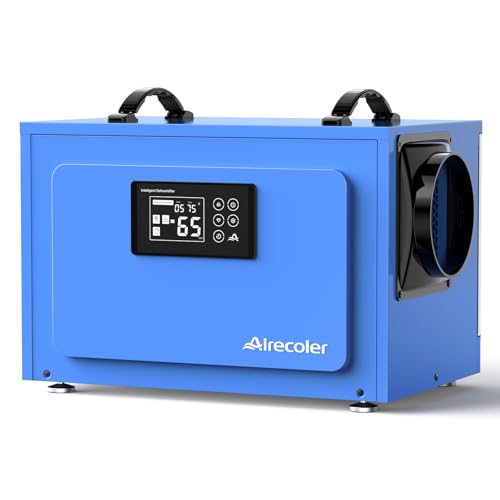
- 125-pint maximum capacity with 265 CFM airflow
- Compact design for tight basements and crawl spaces
- Drain hose, auto defrost, timer, and auto restart
Best For: Space-constrained areas up to 6,000 square feet
Versatile Large-Space Pick
Airzentti 155-Pint Dehumidifier

- 155-pint maximum capacity for spaces up to 7,500 square feet
- Built-in pump drains up to 16.4 feet
- Energy Star certified with auto defrost and screen lock
Best For: Large basements and whole-house moisture control
Maximum-Capacity Pick
Moiswell VP320 305-Pint Dehumidifier

- 305-pint maximum capacity with 412 CFM airflow
- Built-in pump drains up to 16.4 feet
- Casters and handles support movement between job sites
Best For: Large-scale drying, restoration, and industrial spaces
Heavy-Duty Pick
160-Pint Basement Dehumidifier

- 160-pint stated capacity for spaces up to 7,000 sq. ft.
- Built-in pump and 16.4-foot drainage hose
- 10-inch wheels and detachable handles
Best For: Large, difficult-to-drain basements and commercial spaces
Balanced Commercial Choice
Waykar 150-Pint Pump Dehumidifier

- 150-pint rating for areas up to 7,000 sq. ft.
- Three drainage options, including a built-in pump
- Energy Star, auto-defrost, and self-drying features
Best For: Large basements needing flexible, energy-conscious drainage
Quiet Energy-Smart Pick
Waykar 150-Pint Smart Dehumidifier

- 150-pint rating with coverage up to 7,000 sq. ft.
- 2025 ENERGY STAR and automatic Comfort Mode
- 40 dB low-speed operation and 5-meter pump lift
Best For: Large basements near living areas needing quiet, automated control
Most Efficient Pick – AEOCKY 140-Pint Commercial Dehumidifier
For shoppers seeking a commercial dehumidifier for basement use, the AEOCKY RHEA-003 emphasizes high moisture-removal capacity and energy efficiency. It is rated for spaces up to 8,000 square feet, with output listed at up to 140 pints per day in very humid conditions and 95 pints per day in a warm, damp basement.
Best For: Large basements, crawl spaces, whole-house applications, and buyers prioritizing certified energy efficiency.
Pros:
- ENERGY STAR Most Efficient 2025 certification is highlighted in the supplied specifications.
- Designed for spaces up to 8,000 square feet with high-capacity moisture removal.
- Includes smart humidity control, power-off memory, and low-temperature operation features.
Cons:
- The listed pint capacity varies substantially by temperature and relative humidity conditions.
- The supplied notes do not specify tank size or confirm that a drain hose is included.
Choose this model when efficiency and broad coverage matter as much as raw capacity. Its smart controls and stated low-temperature performance add useful flexibility for basement environments, but verify the included drainage setup before purchase.
Large-Space Value – Waykar 150-Pint Basement Dehumidifier
The Waykar is a practical commercial dehumidifier for basement and whole-house use, combining 150-pint daily removal with coverage for spaces up to 7,000 square feet. Its adjustable 30%–80% humidity range, auto swing airflow, and flexible drainage options suit extended operation in large areas.
Best For: Large basements, garages, whole homes, offices, and other spaces needing broad airflow coverage.
Pros:
- Rated to remove up to 150 pints per day under listed test conditions.
- 90-degree auto-swing airflow helps distribute dry air across a larger area.
- Offers continuous drainage, an 8-liter tank, auto-defrost, overload protection, and a 24-hour timer.
Cons:
- The included drain hose is listed as 3.3 feet, which may limit placement options.
- Its 7,000-square-foot coverage is lower than the largest model in this roundup.
This is a well-rounded choice for buyers who want high capacity without giving up everyday controls. The wide humidity range and auto-swing airflow are especially useful when basement moisture is unevenly distributed.
Heavy-Duty Commercial Pick – Moiswell 200-Pint Dehumidifier With Pump
For demanding basement, warehouse, or restoration work, this Moiswell commercial dehumidifier for basement use pairs a 200-pint maximum rating with a built-in pump. It is designed for spaces up to 7,500 square feet and includes features intended for continuous operation in commercial and water-damage environments.
Best For: Water-damage restoration, warehouses, construction sites, garages, and large basements requiring pumped drainage.
Pros:
- High-capacity design rated for up to 200 pints per day, with a 95-pint AHAM rating listed.
- Built-in pump can move water up to 16.4 feet vertically or horizontally.
- Large 8-inch wheels, detachable handles, auto-defrost, and copper components support demanding use.
Cons:
- At 78 pounds, it is substantially heavier than the residential-oriented options listed here.
- The supplied dimensions and heavy-duty design may require more installation and storage space.
This is the strongest fit when drainage and rugged mobility are more important than compactness. The pump and long hose simplify placement, while the commercial build is suited to difficult jobs beyond routine basement humidity control.
Compact Control Pick – Kesnos 150-Pint Basement Dehumidifier
The Kesnos offers a useful balance for shoppers comparing a commercial dehumidifier for basement applications with a more manageable portable design. It is rated for up to 7,500 square feet and provides 150-pint capacity, adjustable 30%–80% humidity control, and both tank and continuous-drain operation.
Best For: Basements, offices, stockrooms, bathrooms, and other large residential or light-commercial areas where portability matters.
Pros:
- Rated for up to 150 pints per day and coverage up to 7,500 square feet.
- Front humidity display, two fan speeds, timer, and sleep mode make operation easier to manage.
- Includes auto-defrost, memory restart, safety lock, washable filter, and casters.
Cons:
- Continuous drainage requires a 3/4-inch garden hose, which is not included.
- The 2.12-gallon tank is relatively small for a high-capacity unit if continuous drainage is unavailable.
- The supplied notes list a one-year warranty, with extended coverage available as an option.
Pick the Kesnos if you want high capacity in a lighter, more mobile package. Its front display and sleep mode are convenient for daily basement use, while the included drain hose helps simplify long-term operation.
Compact Commercial Pick – Airecoler GT-X5
If you need a commercial dehumidifier for basement or crawl-space use, the Airecoler GT-X5 combines a compact footprint with continuous-drain operation. It removes up to 125 pints per day under maximum conditions, offers 265 CFM airflow, and fits low-clearance areas more easily than many larger units.
Best For: Basements, crawl spaces, garages, and other damp areas up to 6,000 square feet where space-saving installation matters.
Pros:
- Compact 19.2-by-12.2-by-13.4-inch design suits tight or low-clearance spaces.
- Includes a drain hose and supports continuous draining, auto defrost, auto restart, and timer operation.
- Offers adjustable humidity control and a five-year warranty structure.
Cons:
- Its 125-pint maximum capacity is lower than the larger units in this roundup.
- At 50 pounds, it may still require two-person handling for difficult installations.
The GT-X5 is a practical choice when installation flexibility is as important as moisture-removal capacity. Its small size and automatic features make it well suited to set-and-forget basement or crawl-space drying.
Versatile Large-Space Pick – Airzentti 155-Pint Dehumidifier
For shoppers comparing a commercial dehumidifier for basement, the Airzentti 155-pint model stands out for its built-in pump and broad installation flexibility. It is rated for spaces up to 7,500 square feet and combines 220 CFM airflow with gravity- or pump-drain options.
Best For: Large basements, crawl spaces, attics, garages, and whole-house or light industrial moisture control.
Pros:
- Removes up to 155 pints per day under maximum conditions and is rated for up to 7,500 square feet.
- Built-in pump drains water up to 16.4 feet, while a supplied hose supports gravity draining.
- Includes auto defrost, auto drain, screen lock, Energy Star certification, and TUV compliance.
Cons:
- At 59 pounds, it is heavier than the more compact Airecoler option.
- The 220 CFM airflow is lower than the airflow rating of the highest-capacity model here.
This Airzentti unit offers a strong balance of capacity and drainage convenience. The built-in pump is especially useful when a floor-level drain or nearby gravity outlet is unavailable.
Maximum-Capacity Pick – Moiswell VP320 305-Pint Dehumidifier
If you need a high-output commercial dehumidifier for basement drying or restoration work, the Moiswell VP320 provides up to 305 pints of moisture removal per day under maximum conditions. Its 412 CFM airflow, built-in pump, and heavy-duty mobility features are designed for demanding large-space applications.
Best For: Very large basements, warehouses, factories, restoration projects, and other spaces up to 8,500 square feet.
Pros:
- Highest listed capacity at 305 pints per day, with 130 PPD at AHAM conditions.
- Built-in pump supports drainage up to 16.4 feet vertically or horizontally.
- 412 CFM airflow, swivel casters, ergonomic handles, auto defrost, and automatic restart support professional use.
Cons:
- Its 106.4-pound weight and taller design make it less convenient for residential repositioning.
- Requires a 20-amp receptacle because it uses a NEMA 5-20 plug.
- Its 1,700-watt draw is substantially higher than the smaller models.
The VP320 is the strongest option when rapid drying and maximum capacity take priority over portability and household simplicity. Confirm the electrical requirements before choosing it for a basement installation.
Heavy-Duty Pick – 160-Pint Basement Dehumidifier
For demanding moisture problems, this commercial dehumidifier for basement use combines a stated 160-pint daily capacity with 265 CFM airflow and coverage up to 7,000 square feet. Its built-in pump, long hose, wheels, and detachable handles make it practical for large basements and other hard-to-drain spaces.
Best For: Large basements, warehouses, construction areas, and water-damage cleanup where high capacity and rugged mobility matter.
Pros:
- Removes up to 160 pints per day under the stated rating and covers up to 7,000 square feet.
- Built-in pump can move water up to 16.4 feet vertically or horizontally, with a matching drainage hose included.
- Large 10-inch wheels, detachable handles, automatic defrost, and continuous-drain capability support demanding environments.
Cons:
- At 67 pounds, it is heavier than a typical residential dehumidifier.
- The commercial-grade size may be more equipment than smaller basements require.
This is the strongest fit when basement moisture is extensive and drainage flexibility is a priority. Its durable construction and transport features favor heavy-duty use over compact convenience.
Balanced Commercial Choice – Waykar 150-Pint Pump Dehumidifier
This Waykar commercial dehumidifier for basement use is rated to remove up to 150 pints daily and cover areas up to 7,000 square feet. It adds Energy Star certification, adjustable 30%–80% humidity control, three drainage options, and a quiet portable design for flexible everyday operation.
Best For: Large basements, garages, cellars, warehouses, and unattended areas where energy-conscious operation and flexible drainage are useful.
Pros:
- Rated for up to 150 pints per day and spaces up to 7,000 square feet.
- Built-in pump lifts water up to 9.84 feet, while gravity drainage and the removable tank offer alternatives.
- Includes auto-defrost, self-drying, adjustable humidity control, timer operation, and memory restart.
- Omnidirectional casters, a storable handle, and cord storage make repositioning easier.
Cons:
- The included gravity-drain hose is only 3.3 feet long.
- The notes state that unplugging after a normal shutdown requires resetting the pump function.
With multiple drainage methods and a broad humidity-control range, this model is a versatile all-around option. It is especially practical when the basement lacks a convenient floor drain but does not require the highest stated capacity in this lineup.
Quiet Energy-Smart Pick – Waykar 150-Pint Smart Dehumidifier
For buyers who want a commercial dehumidifier for basement use without constant manual adjustment, this Waykar model pairs a 150-pint rating with coverage up to 7,000 square feet. Its 2025 ENERGY STAR positioning, automatic Comfort Mode, quiet low-speed operation, and built-in pump support continuous basement moisture control.
Best For: Large home basements, storage areas, and commercial spaces where quiet operation, automated humidity management, and energy efficiency are priorities.
Pros:
- Rated to remove up to 150 pints per day and supports adjustable humidity from 30% to 80% RH.
- 2025 ENERGY STAR, ETL-listed, and DOE-compliant features are designed for efficient operation.
- Comfort Mode automatically adjusts targets based on temperature, while low operation is stated at 40 dB.
- Built-in pump can lift water up to 5 meters, with tank and gravity-drain alternatives.
Cons:
- The 5-meter pump hose may require a separate setup for longer runs.
- The supplied notes describe advanced automated features that may be unnecessary for simpler basement applications.
This model stands out for hands-off control and quieter operation rather than maximum rated capacity. It is a strong choice when the basement is near living areas or when reducing energy use and routine adjustments is important.
How We Picked the Best Commercial Dehumidifier for Basement Use
We focused on high-capacity units designed for large or persistently damp areas rather than compact residential models. Each product was assessed for advertised pint-per-day capacity, recommended coverage, continuous-drain setup, pump availability, humidity controls, auto-defrost functions, portability, and suitability for basements, crawl spaces, warehouses, and restoration projects.
Capacity claims can vary with temperature and relative humidity, so treat published pint ratings as comparison points rather than guaranteed daily output. A unit’s drainage design and ability to operate reliably in cooler basement conditions can matter just as much as its maximum rating.
Quick Comparison
| What to Compare | Best For | Why It Matters |
|---|---|---|
| 125–160 pints | Most residential basements and large rooms | Strong moisture removal without the largest commercial footprint |
| 200+ pints | Severe dampness, restoration, and expansive spaces | Higher potential output for demanding conditions |
| Built-in pump | Drainage above or far from the unit | Moves condensate where gravity drainage is not possible |
| Drain hose only | Floor drains and nearby outlets | Simple, low-maintenance continuous drainage |
| Auto-defrost | Cool basements and crawl spaces | Helps prevent frost buildup on the coils |
Key Buying Factors for a Commercial Dehumidifier for Basement
Capacity and Coverage
Choose capacity according to square footage, humidity severity, temperature, and water intrusion. A lightly damp finished basement may need less output than an equally sized unfinished space with seepage or recent flooding. Oversizing can shorten drying time, but it may also increase cost, noise, and energy use.
Drainage and Pump Design
Continuous drainage is usually more convenient than emptying a tank. Confirm whether the model includes a hose, has a built-in condensate pump, and can lift water high enough for your drain location. If a floor drain is available, gravity drainage may be the simplest option.
Cold-Weather Operation and Controls
For cooler basements, look for auto-defrost and clear humidity settings. A built-in humidistat, automatic restart, timer, washable filter, and self-drying function can make long-term operation easier. Check operating-temperature specifications before placing a unit in an unheated area.
Portability, Noise, and Power
Heavy-duty dehumidifiers are often loud and bulky. Locking casters and sturdy handles help when moving between rooms, while a suitable power circuit is essential for high-output models. Leave adequate clearance around air inlets and outlets.
Who Should Buy Which Commercial Dehumidifier for Basement?
For a typical damp basement, a 125- to 160-pint model with continuous drainage offers a practical balance of capacity and size. Choose a pump-equipped unit when the drain is elevated or distant. For major leaks, restoration work, warehouses, or very large unfinished areas, consider a 200-pint-or-higher model with robust drainage and high airflow. If energy use is a priority, compare Energy Star listings and real operating conditions rather than relying only on the advertised pint rating.