Choosing the right transfer aid can make daily care safer, faster, and less physically demanding for both users and caregivers.
Our roundup of compact sit to stand patient lifts focuses on portability, stability, weight capacity, and ease of use so you can narrow the field with confidence.
Best 10 Compact Sit to Stand Patient Lifts Picks for 2026
Compact Manual Stand Aid
Arjohuntleigh Sara Stedy Sit to Stand Lift

- Fully assembled for immediate use
- Supports up to 400 pounds
- Designed for safe assisted transfers
Best For: Caregivers needing a ready-to-use manual stand assist
Portable Rolling Chair Lift
VOCIC AX35 Electric Floor Lift

- Four-wheel design for short transfers
- Folds flat for compact storage
- Supports up to 350 pounds
Best For: Indoor room-to-room transfers and floor lift assistance
Heavy-Duty Stand Assist
Lumex LF1600 Sit to Stand Lift

- Supports users up to 400 pounds
- Comfort features include padded seat and knee pads
- Maneuverable through most doorways
Best For: Users needing durable assisted standing support
Ultra Compact Power Lift
Joerns Hoyer Journey Electric Stand Aid

- Tool-free folding compact design
- Needs only 4.3 inches of clearance
- Includes two batteries and charger
Best For: Compact powered stand assistance with easy storage
Compact Transfer Aid
Adjustable Sit-to-Stand Support

- Multiple seat and knee pad height settings
- 26.5-inch width fits most doorways
- Lockable casters and safety strap add control
Best For: Home caregivers needing a compact manual transfer aid
Powered Lift
Electric Stand-to-Sit Patient Lifter

- Electric lift reduces caregiver effort
- Rechargeable battery with handheld remote
- 400 lb. capacity with adjustable base
Best For: Caregivers wanting powered transfer assistance
Ultra-Compact Stand Aid
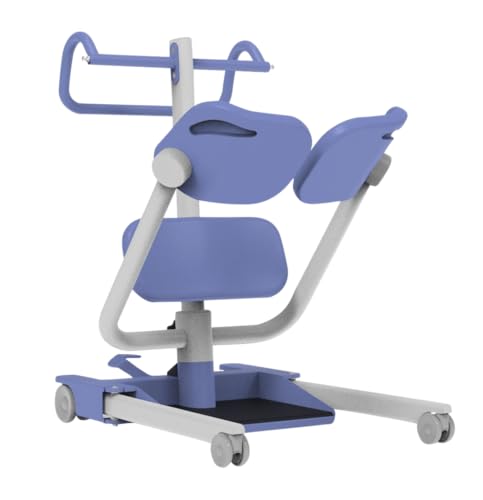
- Folds for easier storage and transport
- 440 lb. safe working load
- Adjustable base fits around furniture
Best For: Portable manual transfers in tight spaces
Active Stand Assist
VOCIC One-Step Stand Assist Lift

- 400 lb capacity with reinforced steel frame
- Padded grips, shin pads, and split-seat cushions
- No safety belt; designed for users who can support their upper body
Best For: users who can sit up and need indoor stand-assist transfers
Compact Electric Transfer Trolley
STS 500 Compact Sit to Stand Lift
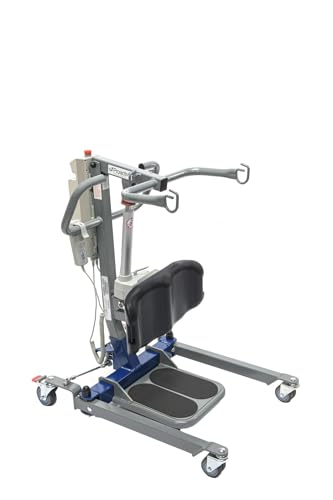
- Electric lift with handheld controller and emergency stop
- 500 lb capacity and 4.7-inch base height for tight spaces
- Rechargeable battery and adjustable knee brace for daily use
Best For: partial-weight-bearing adults needing powered indoor transfers
Reliable Home Care Stand Assist
Vive Mobility Sit to Stand Lift

- Designed for users who can support 60–70% of body weight
- 400 lb capacity with foam-padded contact points
- 26-inch base width means doorway fit should be checked
Best For: home or facility transfers where partial standing is possible
Compact Manual Stand Aid – Arjohuntleigh Sara Stedy Sit to Stand Lift
If you’re comparing compact sit to stand patient lifts for everyday transfers, the Arjohuntleigh Sara Stedy is a practical manual option built for assisted standing and chair-to-chair movement. It arrives fully assembled, supports up to 400 pounds, and is designed to help caregivers guide users safely without a complicated setup.
Best For: Caregivers who want a ready-to-use manual stand assist for safe transfers in home or clinical settings.
Pros:
- Fully assembled for immediate use
- Supports users up to 400 pounds
- Designed to help reduce falls and injuries during transfers
- Built for efficient sit-to-stand assistance
Cons:
- Manual design may require more caregiver involvement than powered lifts
- Intended user height range is limited by the product specifications
The Sara Stedy stands out when simplicity and reliability matter more than extra features. If you need a straightforward lift aid that’s ready out of the box, this is a strong fit for supported standing and transfer routines.
Portable Rolling Chair Lift – VOCIC AX35 Electric Floor Lift
Among compact sit to stand patient lifts, the VOCIC AX35 is geared toward short-distance room-to-room transfers and getting users up from the floor. Its 4-wheel rolling design, fold-flat seat and armrests, and compact footprint make it a practical choice when storage space is limited.
Best For: Short indoor transfers and floor-to-chair assistance where portability and compact storage matter.
Pros:
- Four wheels support short-distance indoor transfers
- Folds flat for easier storage in tight spaces
- Supports up to 350 pounds
- Includes wheel locks and easy-to-grip handles for added stability
Cons:
- Assembly is required
- Primarily designed for indoor use and short transfers
The AX35 is less of a traditional stand aid and more of a compact moving solution for indoor assistance. If you need a portable lift that can be stored easily and used for brief transfers, it offers a focused feature set.
Heavy-Duty Stand Assist – Lumex LF1600 Sit to Stand Lift
If you’re shopping compact sit to stand patient lifts for reliable daily support, the Lumex LF1600 is a heavy-duty manual stand assist designed to help users sit and stand with less strain. It combines cushioned contact points, a steel frame, and a maneuverable size that can still fit through most doorways.
Best For: Assisted standing and chair transfers for users who need strong support without a bulky footprint.
Pros:
- Supports users up to 400 pounds
- Steel frame remains maneuverable through most doorways
- Cushioned knee pads, ergonomic handbars, and padded seat improve comfort
- Designed to reduce caregiver strain during transfers
Cons:
- Manual operation requires active user participation
- Heavier than ultra-light portable aids
The LF1600 is a solid choice when comfort and stability are priorities. It’s especially well suited to users who can participate in the transfer and need dependable stand assistance in a durable frame.
Ultra Compact Power Lift – Joerns Hoyer Journey Electric Stand Aid
For buyers comparing compact sit to stand patient lifts, the Joerns Hoyer Journey is a powered stand aid built around portability and storage convenience. It folds without tools, needs only 4.3 inches of clearance, and includes smart monitor technology plus two batteries with an offboard charger.
Best For: Users and caregivers who want a compact electric stand aid that folds for transport and storage.
Pros:
- Tool-free folding compact design
- Requires only 4.3 inches of clearance under furniture
- Includes two batteries and an offboard charger
- Adjustable kneepad and cow-horn help fit a range of patients
Cons:
- Heavier than manual stand aids
- Powered system may be more than some users need for simple transfers
The Journey is a strong pick if you want electric lift support without giving up compact storage. Its folding frame and clearance-friendly profile make it especially appealing in tighter home environments.
Compact Transfer Aid – Adjustable Sit-to-Stand Support
If you want compact sit to stand patient lifts for home transfers, this PERLECARE model is built around adjustability and easy room-to-room movement. The seat and knee pads offer multiple height settings, while the 26.5-inch width helps it fit through most doorways for bedside, sofa, and wheelchair transfers.
Best For: Caregivers and users who need a stable manual transfer aid with customizable positioning and doorway-friendly size.
Pros:
- Adjustable seat height and two knee pad height options help improve alignment during transfers.
- Additional safety strap adds support when the patient is not fully seated or during movement.
- Four smooth casters and lockable wheels improve control and stability.
- Quick-install seat avoids complex setup and traditional pull-ring handling.
Cons:
- Requires sufficient upper and lower body strength for use.
- Manual operation may be less convenient than powered alternatives.
This is a practical fit for buyers who value a compact frame, straightforward setup, and adjustable transfer positioning. Its strength is safe, controlled sit-to-stand assistance rather than heavy-duty powered lifting.
Powered Lift – Electric Stand-to-Sit Patient Lifter
Among compact sit to stand patient lifts, this electric model stands out for handling transfers with less physical effort from caregivers. It uses a rechargeable battery, handheld remote, and adjustable base and knee pad settings to support safe, stable movement in home care or facility settings.
Best For: Care teams that want a powered sit-to-stand lift with adjustable fit and a high weight capacity.
Pros:
- Electric operation reduces strain on caregivers and supports safer transfers.
- Rechargeable battery and handheld remote make it easier to use.
- Adjustable base, height, and knee pad settings improve positioning.
- 400 lb. weight capacity and manual lowering device add practical backup support.
Cons:
- At 117 pounds, it is much heavier than manual compact lifts.
- Its footprint and weight may be less convenient for tight-space storage or frequent transport.
This is the strongest pick if powered assistance matters more than portability. It offers a lot of lifting support, but buyers should plan for the added size and weight that come with an electric design.
Ultra-Compact Stand Aid – Packable Manual Lift
If your priority is compact sit to stand patient lifts that can be packed away or moved through tight areas, the Joerns Hoyer UP is designed for exactly that kind of use. Its ultra-compact, foldable build and adjustable base make it a practical option for home care, travel, or rooms with limited space.
Best For: Users who need a portable manual stand aid that folds for storage and supports active transfers.
Pros:
- Ultra-compact and foldable design makes storage and transport easier.
- 440 lb. safe working load is strong for a portable manual model.
- Adjustable base helps it fit around furniture and doorways.
- Sling-free sit-to-stand design supports toileting and mobility needs.
Cons:
- Requires the patient to have weight-bearing ability and trunk strength.
- Manual operation may require more caregiver participation than powered lifts.
This model is a smart match for buyers who need portability without giving up load capacity. It keeps the design simple and space-saving, which makes it appealing for tight home environments and occasional transport.
Active Stand Assist – VOCIC One-Step Stand Assist Lift
If you’re comparing compact sit to stand patient lifts for home use, the VOCIC AY03 is built for users who can sit up and support their own upper body while needing help with safe transfers. Its open-design format, 400 lb capacity, and low-profile base make it a practical option for moving between a bed, chair, or other indoor furniture without adding unnecessary bulk.
Best For: adults who can bear some weight and need a compact, manual stand-assist lift for indoor transfers.
Pros:
- 400 lb weight capacity with reinforced steel construction for added stability
- Soft foam handgrips, padded shin rests, and split-seat cushions improve comfort during transfers
- Dual-lock braking system helps keep the lift steady during positioning
- 2-level adjustable knee pad and low 6 cm base support easier setup around furniture
Cons:
- Does not include or support a safety belt restraint
- Only intended for people who can sit up and support their own core upper body
- Not recommended for completely immobile or paralyzed patients
The VOCIC stands out as a straightforward transfer aid when you need an active sit-to-stand design with sturdy construction and a compact footprint. It is best suited to assisted mobility scenarios, not full-lift dependence.
Compact Electric Transfer Trolley – STS 500 Compact Sit to Stand Lift
The STS 500 is a compact sit to stand patient lift designed for caregivers who want powered assistance in tight indoor spaces. With a handheld controller, emergency stop, and 24V DC motor, it focuses on controlled transfers for users who can partially bear weight but need help standing safely from beds, chairs, toilets, and similar surfaces.
Best For: caregivers needing a compact electric lift for partial-weight-bearing adults in home or clinical settings.
Pros:
- Electric operation with handheld controller and emergency stop button
- 4.7-inch base height helps fit under many beds, chairs, and recliners
- Supports up to 500 lbs while staying relatively compact
- Rechargeable battery is described as lasting twice as long as standard options
Cons:
- Heavier unit at 119 pounds
- Best suited for patients up to 5’9″ according to the product notes
- Intended for users who can partially bear weight, not full non-weight-bearing transfers
For buyers prioritizing powered lifting in a compact frame, the STS 500 offers strong capacity and helpful adjustments for everyday transfers. Its lower mast height and short base make it especially relevant where space is limited.
Reliable Home Care Stand Assist – Vive Mobility Sit to Stand Lift
The Vive Mobility stand assist is a practical compact sit to stand patient lift for caregivers who need help moving adults that can support some of their body weight. It is aimed at transfers between common household spots like a bed, wheelchair, toilet, or sofa, with a steel frame, padded contact points, and dual locking brakes for added control.
Best For: home care or facility transfers for users who can support about 60–70% of their body weight.
Pros:
- Supports users who can stand with partial body-weight support
- Foam-covered handrails, cushioned shin rests, and split seat pads add comfort
- Dual locking brakes help prevent unwanted movement during transfers
- 400 lb capacity and swivel casters support everyday mobility tasks
Cons:
- Widest base measures 26 inches, so doorway clearance should be checked carefully
- Not intended for users who cannot stand enough to support partial body weight
This Vive model is a sensible choice when you need a dependable stand-assist lift with simple, caregiver-friendly features. Just make sure your doorways can accommodate the base before purchase, since fit can be the deciding factor in smaller homes.
How We Picked the Best Compact Sit to Stand Patient Lifts
We focused on Compact Sit to Stand Patient Lifts that balance maneuverability with dependable support. The best options in this category are easy to position in tight rooms, simple to operate, and built with practical safety features such as adjustable knee support, secure straps, lockable casters, and strong frames. We also favored models with clear weight ratings and designs suited to both home care and facility use.
Quick Comparison
Before choosing, compare the lift type, power source, and footprint. Manual models usually cost less and can be easier to maintain, while electric models reduce caregiver effort and may be better for frequent transfers. Pay close attention to doorway clearance, base width, turning radius, and whether the lift folds or stores easily when not in use.
Key Buying Factors for Compact Sit to Stand Patient Lifts
Fit and Space
Measure the spaces where the lift will be used most often, including bedroom access, bathroom entries, and hallways. A compact frame matters, but so does how far the base opens and whether the unit can clear beds, chairs, and toilets.
Patient Capability
These lifts are designed for people who can bear some weight and participate in the standing motion. If the user cannot support themselves at all, a different transfer solution may be more appropriate.
Safety and Comfort
Look for padded knee support, a stable base, easy-to-secure belts, and smooth rolling casters. Good ergonomics reduce strain during repeated transfers and help keep the user steady throughout the lift.
Battery, Power, and Maintenance
For electric Compact Sit to Stand Patient Lifts, check charging time, battery life, and whether the system is easy to service. For manual models, consider how much caregiver strength is required and whether the mechanism feels intuitive in daily use.
Who Should Buy Which Compact Sit to Stand Patient Lifts?
Choose a manual lift if you want a simpler, more budget-friendly option for occasional transfers and have caregivers who can operate it comfortably. Choose an electric lift if transfers happen often, caregiver fatigue is a concern, or you want more consistent lifting support. For tight homes or multi-room care, prioritize compact designs with folding or portable features. For heavier users, look for higher weight capacities and a wider stability margin. The best choice is the one that matches the user’s mobility level, the caregiver’s needs, and the layout of the care environment.