Folding parallel bars for rehabilitation can make gait training, balance work, and standing practice safer and more repeatable at home, in clinics, or in assisted living spaces.
This roundup focuses on the most practical options for stability, adjustability, weight support, and easy storage so you can choose with confidence.
Best 10 Folding Parallel Bars for Rehabilitation Picks for 2026
USA-Made Fixed Width Stability Pick
Physical Therapy Parallel bars – Fixed Width – (6ft)
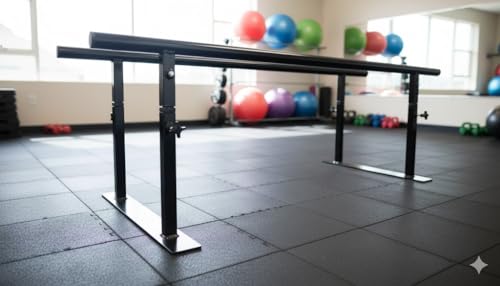
- Freestanding design with wood plates for stability
- 24-inch fixed width and 32"-39" height range
- 350 lb capacity, powder-coated steel, USA-made
Best For: Users who want a stable, fixed-width parallel bar for rehab work
Adjustable Platform-Mounted Option
Rehabilitation Bars, 7' Length, Height & Width Adjustable Parallel Bars

- Width adjusts from 18" to 28" and height from 26" to 39"
- Platform-mounted base with safety tread and end bumpers
- 400 lb capacity with stainless steel handrails
Best For: Clinics needing a secure, highly adjustable rehab bar system
Folding Rehab Bar Pick
7 ft Folding Physical Therapy Parallel Bars

- Foldable frame with adjustable width and height
- 36-inch base opening for accessibility
- 350 lb capacity and 1.5-inch steel handrails
Best For: People who need folding rehab bars with accessible, adjustable design
High-Capacity Home Rehab Choice
6FT Adjustable Parallel Bars for Physical Therapy Home Walking Rehab

- Three width settings and three height settings
- Anchors with expansion screws for added stability
- Very high 666 lb weight capacity
Best For: Home rehab users needing adjustable bars with strong load support
Custom-Fit Support
Adjustable Physical Therapy Parallel Bars

- 3-step width and 4-step height adjustment
- 666 lb heavy-duty steel support
- Detachable design for storage and transport
Best For: Home users and clinics needing adjustable rehab support
Long-Reach Walking Aid

- 6.57-foot length for gait and mobility work
- Height-adjustable frame for therapy sessions
- Disassembles for storage and transport
Best For: Longer walking drills and balance rehab
Heavy-Duty Stability
670lb Adjustable Parallel Bars

- 4 height settings and 3 width options
- 670 lb heavy-gauge steel capacity
- Triple-braced, anchor-ready base
Best For: High-capacity rehab use with reinforced stability
Compact Rehab Pick
THOOUM Adjustable Parallel Bars

- Adjustable width and height settings
- Supports up to 333 pounds
- Includes assembly tools and instructions
Best For: Seniors and rehab users who want a sturdy adjustable setup
Best Heavy-Duty Pick
6FT Adjustable Walking Assist Bar

- 440.92 lb load capacity
- Adjustable height and width
- Drilling install for secure floor fixing
Best For: Dedicated rehab spaces that need a secure high-capacity bar
Reliable Floor-Mount Pick
6Ft Adjustable Rehab Parallel Bars

- 440.92 lb load capacity
- Height and width are adjustable
- Drilling mount helps limit wobble
Best For: Fixed-location rehab use in homes or care facilities
USA-Made Fixed Width Stability Pick – Physical Therapy Parallel bars – Fixed Width – (6ft)
If you need folding parallel bars for rehabilitation-style work, this fixed-width model is a simple, heavy-duty option built for steady everyday use. It offers a freestanding setup, a 24-inch fixed width, and 6-foot handrails, making it a practical fit when you want dependable support without complicated adjustments.
Best For: Clinics or home users who want a stable, USA-made freestanding parallel bar setup with a fixed width.
Pros:
- Freestanding design with included wood plates for added stability.
- 32″ to 39″ height range supports different user needs.
- 1.5″ steel handrails and powder-coated parts for durability.
- 350 lb weight capacity with USA-based support.
Cons:
- Fixed 24″ width offers no width adjustment.
- Does not fold for storage.
- Heavier unit at 52 lbs total.
For buyers who prioritize stability and straightforward setup over adjustability, this model keeps the focus on durability and secure use. It is a solid pick when a fixed-width rehabilitation bar is all you need.
Adjustable Platform-Mounted Option – Rehabilitation Bars, 7' Length, Height & Width Adjustable Parallel Bars
For folding parallel bars for rehabilitation searches, this platform-mounted system stands out for its adjustability and secure base. The 7-foot length, adjustable width, and adjustable height make it useful when you need a more tailored fit for therapy sessions.
Best For: Physical therapy settings that need a sturdy, platform-mounted bar with flexible height and width adjustments.
Pros:
- Width adjusts from 18″ to 28″ for a more customized fit.
- Height adjusts from 26″ to 39″ with spring-loaded plungers.
- Stainless steel handrails and heavy-duty telescoping steel uprights.
- 400 lb load capacity under normal physical therapy use.
Cons:
- Platform-mounted design is less portable than freestanding units.
- Not a folding model.
- Requires floor space for the 7-foot platform base.
This is a strong choice when adjustability and a mounted platform matter more than portability. The numbered height indicators and anti-play design add convenience for repeated rehab use.
Folding Rehab Bar Pick – 7 ft Folding Physical Therapy Parallel Bars
If folding parallel bars for rehabilitation are your priority, this 7-foot model is the clearest match in the group. It combines a foldable frame with adjustable width and height, plus a 36-inch base opening that helps wheelchair passage and general accessibility.
Best For: Buyers who want a folding, adjustable rehab bar with accessibility-focused design.
Pros:
- Foldable frame for easier storage and setup flexibility.
- Width adjusts from 15″ to 32″ and height from 32″ to 39″.
- 36-inch base opening supports wheelchair passage.
- 7-foot length with 1.5-inch steel handrails and 350 lb capacity.
Cons:
- Heavier than some alternatives at 73 lbs total.
- Still requires assembly and two-box shipment.
- Lower weight capacity than some non-folding competitors.
This model is the most directly aligned with shoppers seeking folding rehab bars, especially where adjustable sizing and accessibility matter. It is built for practical everyday therapy use with durable materials and USA-based support.
High-Capacity Home Rehab Choice – 6FT Adjustable Parallel Bars for Physical Therapy Home Walking Rehab
For folding parallel bars for rehabilitation searches, this 6-foot adjustable model offers a lot of flexibility for home walking rehab and balance training. It includes multiple width and height settings, ground-anchoring screws, and a very high weight rating, making it a strong option for users who need extra support.
Best For: Home rehab users who want adjustable bars with a higher load capacity and anchored stability.
Pros:
- Three width settings from 22.4″ to 31.9″.
- Three height settings from 39.4″ to 44.1″.
- Includes expansion screws to anchor the base plates into the ground.
- Rated up to 666 lbs for heavy-duty support.
Cons:
- Requires anchoring for best stability.
- Not a folding design.
- Height range starts higher than some other options.
This is a strong pick when load capacity and adjustability matter most. The rounded corners, smooth finish, and included tools make it practical for a home rehab setup.
Custom-Fit Support – Adjustable Physical Therapy Parallel Bars
For buyers comparing folding parallel bars for rehabilitation, this adjustable model stands out for its compact two-section design and highly customizable fit. It offers 3-step width adjustment and 4-step height adjustment, making it easier to match different users, training goals, and therapy setups while keeping support stable and ergonomic.
Best For: Home users, seniors, and clinics needing a compact, heavy-duty rehab bar with adjustable fit.
Pros:
- 3-step width and 4-step height adjustments help fine-tune positioning for rehabilitation or leg training.
- 666 lb capacity with 2mm-thick steel pipes and anchored base plates for strong daily support.
- Rounded edges, seamless welds, and a scratch-resistant matte finish are designed for safer, easier cleaning.
- Detachable two-section bars make storage and transport more manageable in tighter spaces.
Cons:
- Requires ground-fixed expansion screws for the intended wobble-free setup.
- Not the most space-saving option once fully assembled.
This is a practical choice if you want folding parallel bars for rehabilitation that prioritize adjustability and stability over ultra-light portability. Its main strengths are the customizable dimensions, heavy-duty build, and straightforward cleanup for regular use.
Long-Reach Walking Aid – 6.57Ft Parallel Bars
If you want folding parallel bars for rehabilitation with a longer walking lane, this 6.57-foot set gives you more room for gait drills and mobility work. The height-adjustable frame and stable steel construction are aimed at practical therapy use at home, in a sanatorium, or in a clinic setting.
Best For: Gait training, balance exercises, and rehab spaces that need a longer walking area.
Pros:
- 6.57-foot length provides ample space for walking exercises and mobility training.
- Easy-to-use height adjustment supports customized therapy sessions.
- Heavy-duty steel frame with stable base plates is built for dependable use.
- Individual sections assemble and disassemble for easier storage and transport.
Cons:
- Suction cup use is noted only for smooth surfaces, which may limit placement options.
- No width adjustment is listed in the supplied details.
This is a straightforward option if your priority is space for walking practice rather than maximum configurability. It fits well for rehabilitation routines that need a longer, stable lane and a simple setup.
Heavy-Duty Stability – 670lb Adjustable Parallel Bars
For shoppers looking at folding parallel bars for rehabilitation, this heavy-duty steel model is built around stability and load capacity. With both height and width adjustments, it can be tuned to different recovery stages while the reinforced base and anchor-ready design help keep the frame steady during standing, walking, and balance work.
Best For: Users who need a high-capacity rehab bar with adjustable fit and a reinforced base.
Pros:
- 4 height settings and 3 width options support a more customized rehab setup.
- 670 lb weight capacity offers substantial support for standing and walking exercises.
- Heavy-gauge steel with scratch-resistant, anti-corrosion finish is built for frequent cleaning and daily use.
- Triple-braced, anchor-ready base is designed to reduce wobble and shifting.
Cons:
- Heavier 57.3 lb frame may be less convenient to move frequently.
- Floor mounting is recommended for maximum security.
This model makes sense if stability and adjustability matter more than portability. It is a strong fit for rehab spaces that need a rugged, professional-feeling support bar for repeated use.
Compact Rehab Pick – THOOUM Adjustable Parallel Bars
These folding parallel bars for rehabilitation are built for users who want a more compact therapy setup without giving up adjustability. THOOUM’s model lets you fine-tune both width and height, making it easier to match different body sizes and rehab exercises at home or in a clinic.
Best For: Seniors, patients with leg injuries, and users who need a sturdy adjustable walking support for rehab exercises.
Pros:
- Three width settings and five height settings offer flexible positioning.
- Heavy-duty carbon steel construction supports up to 333 pounds.
- Triangular support structure and pre-drilled holes help improve stability.
- Tools and instructions are included for easier assembly.
Cons:
- Lower load capacity than the 440.92 lb models in this roundup.
- At 4.3 ft style, it is shorter than the 6 ft options.
This is a practical pick if you want adjustable rehab bars that feel sturdy and are straightforward to set up. It stands out more for its compact, adaptable design than for maximum size or weight capacity.
Best Heavy-Duty Pick – 6FT Adjustable Walking Assist Bar
If you want folding parallel bars for rehabilitation with a focus on stability and capacity, this 6 ft walking assist bar is designed for that job. It offers height and width adjustment, a steel build, and floor-fixed installation for users who need dependable support during recovery work.
Best For: Rehab settings, homes, or facilities where a higher-capacity, securely installed walking support is needed.
Pros:
- 440.92 lb load capacity supports a wide range of users.
- Adjustable height and width allow a more customized fit.
- Steel construction with spray coating and high-temperature baking paint helps resist rust and wear.
- Drilling installation helps keep the bars firmly in place.
Cons:
- Requires drilling installation, so it is less portable than freestanding options.
- Best suited to dedicated spaces rather than quick setup and breakdown.
This model is a strong choice when stability matters more than portability. It is especially useful for users who want a secure, adjustable training bar for repeated rehab use in one location.
Reliable Floor-Mount Pick – 6Ft Adjustable Rehab Parallel Bars
For buyers comparing folding parallel bars for rehabilitation, this 6 ft model focuses on the same core priorities as other clinic-style bars: adjustability, steel durability, and secure floor mounting. It is built to support rehab walking and balance work while staying fixed in place during use.
Best For: Rehabilitation centers, hospitals, nursing homes, and home users who want a stable fixed-install walking aid.
Pros:
- 440.92 lb load capacity provides strong support for many users.
- Adjustable height and width settings improve fit for different body sizes.
- Steel frame with spraying and high-temperature baking paint is made for durability.
- Drilling installation reduces wobble and tipping risk during training.
Cons:
- Installation is not quick or portable because it must be drilled down.
- Functionally very similar to the other 6 ft option in this roundup.
This is a straightforward choice if you need a dependable rehab support bar for repeated use in a fixed location. Its biggest strengths are the high weight capacity and secure mounted design.
How We Picked These Folding Parallel Bars for Rehabilitation
We prioritized stable construction, adjustable dimensions, support capacity, and setup style. Because these bars are used for balance and walking practice, the best choices reduce wobble, fit different user heights, and work in the space you actually have.
We also looked for models that make sense for home rehab and professional use, including folding or space-saving designs, fixed-width options, platform-mounted systems, and free-standing builds.
Quick Comparison
In a quick scan, the main differences come down to adjustability, footprint, and intended use. Some Folding Parallel Bars for Rehabilitation are better for compact storage and home walking drills, while heavier-duty systems suit frequent clinical use or larger users who need higher capacity.
- Best for storage: folding or compact designs
- Best for flexibility: height- and width-adjustable models
- Best for support: high-capacity steel frames
- Best for smooth floors: suction-cup or surface-stable designs
Key Buying Factors for Folding Parallel Bars for Rehabilitation
Stability and Capacity
Look for a frame that matches the user’s weight and the intensity of therapy. Higher capacity can add confidence during standing and gait exercises, especially for users who are deconditioned or still rebuilding strength.
Adjustability
Height adjustment is essential for proper shoulder position and safe hand placement. Width adjustment can help dial in a natural walking path and improve comfort during parallel walking, step training, and transfers.
Footprint and Storage
If the bars will be used at home, folding or compact construction matters. Measure doorways, floor space, and storage area before buying so the setup won’t become a burden after delivery.
Mounting Style and Surface
Some units are free standing, while others are platform mounted or designed for smooth floors. Match the mounting style to your room and flooring so the bars stay secure during use.
Grip and User Comfort
Soft armrests, comfortable hand contact, and the right bar diameter can improve adherence to therapy. Small comfort details matter when sessions are repeated several times per week.
Who Should Buy Which Folding Parallel Bars for Rehabilitation?
Home users with limited space: choose a folding or compact option that stores easily after sessions.
Therapy clinics and rehab centers: prioritize steel construction, broad adjustability, and high capacity for frequent use.
Users needing extra confidence while walking: look for wide, stable bases and strong weight ratings.
Shoppers with smooth indoor flooring: consider models designed for stable contact on clean, level surfaces.
For most buyers, the best choice is the model that balances safety, fit, and storage without adding unnecessary complexity. The right Folding Parallel Bars for Rehabilitation should feel secure, adjust to the user, and support consistent practice over time.