If you need mobility support away from home, the right recovery aid can make travel far easier. The best options balance stability, comfort, and portability without adding unnecessary bulk.
This guide to hands free crutch alternatives for travel helps you compare lightweight, foldable, and travel-ready choices so you can pick the safest fit for your injury and itinerary.
Best 10 Hands Free Crutch Alternatives for Travel Picks for 2026
Active Recovery Hands-Free Pick
iWALK3.0 Original Hands Free Knee Crutch

- Hands-free mobility for foot, ankle, and lower leg recovery
- Allows use on stairs, indoors, and outdoors
- Requires fit, balance, and strength qualifications
Best For: Healthy adults who qualify and want a hands-free recovery option for travel
Compact Walker Attachment Choice
Walker Knee Sling with Padded Rest

- Adds a cushioned knee rest to a walker
- Tool-free setup on standard and rolling walkers
- Lightweight and portable for travel or home use
Best For: Walker users recovering from foot, ankle, or knee injuries who need non-weight-bearing support
Natural-Step Hands-Free Option

- Extended support leg for smoother forward movement
- Lightweight aluminum frame for easier handling
- Includes bonus replacement pads
Best For: Active adults seeking a lighter hands-free crutch for recovery and travel
Stability-focused knee crutch
Telescopic knee crutch for below-knee recovery
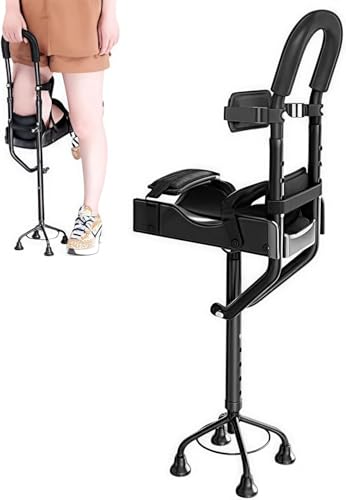
- Hands-free support for below-knee injuries
- Anti-slip four-legged base for better grip
- Adjustable and rated up to 300 lb
Best For: Users with foot, ankle, or lower-leg injuries who want steadier hands-free walking
Adjustable mobility pick
Universal hands-free knee crutch for adults

- Fits left or right foot with wide adjustability
- Reinforced frame supports up to 275 lb
- Four-legged base adds grip on uneven surfaces
Best For: Adults with below-knee injuries who need a configurable hands-free crutch
Compact, Adjustable Support
Hands Free Knee Crutch for Adults

- Soft fabric knee area for added comfort
- Detachable, compact design for easier carrying
- Adjustable strap and waist fit for most adults
Best For: Travel and everyday use during foot or ankle recovery
Lightweight All-Around Option
Hands Free Knee Crutch, Adjustable Knee Walker

- Lightweight aluminum alloy construction
- Adjustable height fits adults 5'1" to 6'1"
- Non-slip base for indoor and outdoor use
Best For: Active adults wanting a simple hands-free recovery aid
Active Recovery Hands-Free Pick – iWALK3.0 Original Hands Free Knee Crutch
If you’re comparing hands free crutch alternatives for travel, the iWALK3.0 is built for mobile adults who want to stay upright and use both hands during recovery. It’s designed for foot, ankle, and lower leg injuries, but it only makes sense if you meet the full fit, strength, balance, and motivation requirements listed by the manufacturer.
Best For: Healthy, active adults recovering from foot or ankle injuries who want a hands-free option and meet the qualification criteria.
Pros:
- Hands-free design helps you move around indoors, outdoors, and on stairs.
- Made for people who want to stay functional during recovery from foot, ankle, or lower leg injuries.
- Includes personalized tech support, warranty coverage, and instructional materials.
- Learning curve is typically 1-3 days for users who adapt well.
Cons:
- Not recommended for elderly users or anyone with balance or strength limitations.
- Requires careful self-screening for height, weight, age, and fitness before purchase.
- May feel uncomfortable at first while you adapt.
This is a niche travel-friendly mobility choice, but it works best only for the right user profile. If you meet the qualifications and want a more independent recovery setup, it can be a strong alternative to traditional crutches.
Compact Walker Attachment Choice – Walker Knee Sling with Padded Rest
For shoppers looking at hands free crutch alternatives for travel, this walker knee sling is a compact option that turns a standard walker into a more supportive non-weight-bearing aid. It’s aimed at recovery situations where stability, comfort, and easier indoor movement matter more than speed or long-distance mobility.
Best For: Adults recovering from lower-limb surgery or injury who already plan to use a walker and want a padded knee support attachment.
Pros:
- Provides a padded knee rest with 5cm thick foam for added comfort.
- Attaches to standard and rolling walkers without tools.
- Lightweight design is easier to move and pack than bulkier mobility devices.
- Adjustable straps help fit different users and walker styles.
Cons:
- Requires a walker, so it is not a standalone mobility solution.
- Best suited to non-weight-bearing recovery, not general everyday use.
- Less versatile than a hands-free crutch for stair use or outdoor movement.
This is a practical pick if you already use a walker and want a more comfortable way to rest the injured leg. It is especially appealing for home recovery and short trips where compactness matters.
Natural-Step Hands-Free Option – Extended Support Knee Crutch
If you want hands free crutch alternatives for travel that still aim for a more natural walking motion, this knee crutch is built with an extended support leg and a lightweight aluminum frame. It is positioned for active adults who need mobility during foot, ankle, or lower leg recovery and who can handle the learning curve.
Best For: Active adults who want a lighter hands-free knee crutch with a more natural stride during recovery.
Pros:
- Extended support leg is designed to help create a smoother forward motion.
- Lightweight aluminum alloy frame may reduce fatigue during use.
- Includes bonus replacement pads for comfort and hygiene over longer recovery periods.
- Hands-free design can help with stairs, shopping, and daily tasks.
Cons:
- Not recommended for elderly users or anyone with balance limitations.
- Requires good coordination, strength, and adaptation time.
- Still needs careful fit and user screening before purchase.
This model makes sense if portability and a more natural stride are priorities. Like other hands-free knee crutches, it is best suited to confident users who can adjust quickly and safely.
Travelable Knee Scooter Pick – Lightweight Foldable Knee Scooter
For hands free crutch alternatives for travel, a foldable knee scooter can be the more practical choice if you want seated knee support instead of a walking-style device. This model is aimed at adults recovering from foot, ankle, or leg injuries and is designed to be easier to transport, store, and use on smooth surfaces.
Best For: Adults who want a foldable knee scooter that is easier to pack for travel and works well for indoor and smooth outdoor use.
Pros:
- Foldable design makes it easier to transport and store.
- Detachable storage basket adds convenience for daily errands.
- Dual brakes and 8-inch wheels improve control and stopping power.
- 300-pound weight capacity supports a wide range of adult users.
Cons:
- At 24 lbs, it is still more cumbersome than a crutch-style hands-free option.
- Best on indoor and smooth outdoor surfaces, not rough terrain.
- Requires enough space for turning and maneuvering compared with crutches.
This is a solid travel-friendly knee walker if portability and stability matter more than standing mobility. It is especially appealing for users who want a folding recovery device that can fit more easily into a car trunk.
Stability-focused knee crutch – Telescopic knee crutch for below-knee recovery
If you’re comparing hands free crutch alternatives for travel, this telescopic knee crutch is a practical option for below-knee injuries that keeps pressure off your hands while you move. It is designed for foot, ankle, and lower-leg recovery, and the four-legged base plus anti-slip rubber footing are meant to help with stability on wet or slippery ground.
Best For: People recovering from foot, ankle, or lower-leg injuries who want a hands-free walker-style alternative for short trips and day-to-day mobility.
Pros:
- Supports non-weight-bearing recovery below the knee and is also positioned for below-knee amputees.
- Four-legged base with anti-slip rubber and thick tread for better grip on slick surfaces.
- Adjustable height, leg circumference, and padded contact points for a more customized fit.
- Rated to withstand up to 300 pounds.
Cons:
- Requires a 3-5 day learning period before it feels natural to use.
- Only intended for below-knee situations, so it will not suit every injury type.
This model makes sense if you want a hands-free mobility aid with a sturdier, more walker-like feel than a basic cane. It should appeal most to users who can handle the adaptation period and need dependable support for moving around independently.
Adjustable mobility pick – Universal hands-free knee crutch for adults
For buyers looking at hands free crutch alternatives for travel, this universal knee crutch is built for single-leg injuries below the knee and is designed to keep your hands free while you walk. Its reinforced frame and four-legged rubber base are aimed at improving stability on stairs, grass, wet floors, and other uneven surfaces you may encounter outside the house.
Best For: Adults with a below-knee injury who need a fully adjustable hands-free crutch for errands, stairs, and everyday movement.
Pros:
- Universal left/right design with adjustable thigh and calf lengths for a more tailored fit.
- Reinforced aluminum alloy frame supports up to 275 lbs.
- Four-legged rubber base is designed for extra grip on wet or uneven ground.
- Intended to reduce hand, arm, and underarm soreness during recovery.
Cons:
- Only suitable for users with below-knee injuries and specific physical requirements.
- Usually takes 1-3 days to adapt, so it is not an instant replacement for normal walking.
This is a strong pick if fit and adjustability matter most, especially if you want one device that can be configured for either foot. It is less of a universal solution than it first appears, but for the right user it offers a solid balance of support, mobility, and hands-free convenience.
Compact crutch add-on – Knee sling support attachment for crutches
If you want hands free crutch alternatives for travel that are less bulky than a knee scooter, this crutches knee sling is designed to support your knee from underneath and shift pressure away from your hands and armpits. It attaches to most standard crutches without tools, making it a lightweight add-on for tighter spaces, indoor movement, and short recovery trips.
Best For: People using standard crutches who want a lighter, more compact way to reduce hand and underarm pressure during non-weight-bearing recovery.
Pros:
- Under-knee support helps redistribute pressure away from the hands and armpits.
- Compact alternative to a knee scooter for kitchens, bathrooms, and tight indoor spaces.
- Soft foam cushion and crutch pad covers add comfort during longer use.
- Lightweight at 0.8 lb and fits most standard crutches without tools.
Cons:
- Works as an attachment to crutches, so it is not a standalone walking device.
- Best suited to users already comfortable with crutch-based mobility.
This is the most portable option in the group if you already have crutches and want more comfort without switching to a larger mobility aid. It trades full device replacement for convenience, which can be a smart compromise for travel and indoor navigation.
Compact, Adjustable Support – Hands Free Knee Crutch for Adults
If you need hands free crutch alternatives for travel, this compact knee crutch is worth a look because it is designed to be detachable, adjustable, and easy to carry. It also uses soft fabric at the knee and lets you adjust the shoulder strap and waist circumference for a more customized fit.
Best For: Adults recovering from foot or ankle injuries who want a compact, easy-to-store mobility aid for home use and short trips.
Pros:
- Soft fabric knee support aims to improve comfort during recovery.
- Adjustable shoulder strap and waist fit help it suit most adults.
- Compact, detachable design makes storage and transport simpler.
- Can be used indoors and outdoors for everyday movement.
Cons:
- Product notes do not mention weight capacity.
- It is still a knee-based device, so it may take some getting used to.
Overall, this is a practical travel-friendly option if you want something lighter to manage and easier to pack than bulkier recovery gear. Its focus is on adjustability and portability rather than extra features.
Lightweight All-Around Option – Hands Free Knee Crutch, Adjustable Knee Walker
For shoppers comparing hands free crutch alternatives for travel, this adjustable knee crutch offers a straightforward balance of mobility, comfort, and portability. Its aluminum alloy frame keeps the build relatively light, while the telescopic height adjustment and EVA padding help it adapt to different users.
Best For: Adults who want a lightweight, hands-free recovery aid they can use indoors or outdoors while staying active.
Pros:
- Hands-free design can reduce strain on arms, wrists, and shoulders.
- Telescopic height adjustment fits adults from 5’1″ to 6’1″.
- Thick EVA padding helps distribute weight more evenly.
- Non-slip base is designed for indoor and outdoor traction.
Cons:
- Supports up to 220 lbs, so it is not for heavier users.
- Some practice may be needed before it feels natural to use.
This model is a solid general-purpose option if you want something easier to handle than traditional crutches and still usable beyond the home. The combination of adjustability and stability makes it a sensible pick for everyday recovery routines.
Stable 4-Point Design – Hands Free Knee Crutch with 4-Prong Base
If stability matters most in your search for hands free crutch alternatives for travel, this model stands out with its 4-prong rubber base and lightweight aluminum frame. It is built for active adults recovering from foot, ankle, or lower leg injuries who want more balance than a single-point design can provide.
Best For: Active adults with good balance who want a more stable hands-free recovery option for daily use.
Pros:
- Wide 4-point base is designed to improve balance and ground contact.
- Lightweight aluminum frame helps reduce fatigue while moving.
- Includes a replacement pad set for easier cleaning and long-term use.
- Suitable for indoor and outdoor recovery routines.
Cons:
- Not recommended for elderly users or people with poor balance.
- Requires a short learning curve and some coordination.
- Weight and strength limits are important to consider before buying.
This is the most stability-focused pick in the group, but it is also the most selective about who should use it. If you are an active user who wants extra ground contact and can handle the learning curve, it offers a strong alternative to traditional crutches.
How We Picked the Best Hands Free Crutch Alternatives for Travel
For Hands Free Crutch Alternatives for Travel, we focused on real-world convenience: compact storage, manageable weight, easy setup, and support that works in airports, hotels, and short trips. We also prioritized adjustability, secure fit, and designs that help reduce arm fatigue compared with traditional crutches.
We excluded anything that looked too bulky, too specialized, or unsuitable for common travel situations. Safety matters most, so we favored options with stable bases, strong frame materials, and clear fit requirements.
Quick Comparison
In general, knee scooters are better for longer distances and smoother surfaces, while hands-free knee crutches and knee sling styles are usually more compact for tighter spaces and quicker movement. Foldable designs are easiest to pack, but they may trade off a little stability or comfort. If you expect lots of walking, transfers, or uneven terrain, stability should outweigh pure portability.
Key Buying Factors for Hands Free Crutch Alternatives for Travel
Portability and Foldability
Measure how the device will fit in a car trunk, hotel room, or checked luggage. Foldable frames, removable parts, and lighter materials are major advantages when traveling.
Stability and Support
Travel often means ramps, curbs, tile floors, and crowded terminals. A wider base, good traction, and a secure knee or leg platform can make a big difference in confidence and safety.
Fit and Adjustment Range
Look for height adjustability and left/right compatibility if you need flexibility. The wrong fit can cause discomfort, poor posture, or reduced control.
Destination and Terrain
A knee scooter may be ideal for flat indoor environments, while a more compact hands-free support option can be better in tight spaces. If your travel includes stairs, gravel, or frequent vehicle transfers, choose a model that is easier to lift and maneuver.
Recovery Requirements
Not every mobility aid works for every injury. Some Hands Free Crutch Alternatives for Travel are best for non-weight-bearing foot or ankle recovery, while others suit below-knee needs only. Follow your clinician’s guidance before deciding.
Who Should Buy Which Hands Free Crutch Alternatives for Travel?
Choose a knee scooter if you want the most comfortable option for longer distances and can handle a larger frame. Choose a compact hands-free knee crutch or knee sling if your priority is easier packing and simpler travel-day movement.
If you need the most stable feel, look for designs with a broader support platform or base. If you need the lightest setup for short trips, prioritize low weight and fast adjustment. The best choice is the one that matches your injury, your travel plans, and the places you actually need to move through.