If you’re recovering from hip surgery, a dislocation, or a painful strain, the right brace can make daily movement feel safer and more controlled.
This roundup of hip abduction braces for recovery focuses on adjustable support, comfort, and practical post-op stability so you can narrow down the best fit for your needs.
Best 10 Hip Abduction Braces for Recovery Picks for 2026
Medical-Grade Post-Op Support
Professional Hip Abduction Brace
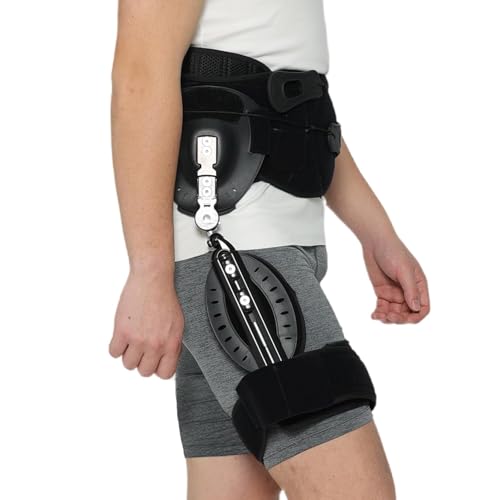
- Rigid frame for post-op hip stabilization
- Adjustable ROM hinge for controlled rehab
- Universal fit with left/right configuration
Best For: Post-op recovery and dislocation prevention
Universal Hinged Stabilizer

- Universal fit for adult users
- Hinged design supports controlled movement
- Made for hip replacement and sciatica
Best For: Straightforward post-op support
Adjustable ROM Protector

- 6-angle ROM adjustment from 0° to 100°
- Supports hip alignment and movement control
- Breathable materials for extended wear
Best For: Customized motion control and stability
Adjustable Compression Pick
5-in-1 Hip & Thigh Recovery Brace

- Targets hip, groin, thigh, and hamstring areas
- 3 straps help dial in compression and fit
- Breathable neoprene for daily wear
Best For: daily recovery support with adjustable compression
Controlled Motion Support
Hinged ROM Hip Abduction Stabilizer

- Six-angle ROM adjustment with flexion limits
- Built for post-op support and joint protection
- Breathable materials for left-leg wear
Best For: controlled post-op recovery on the left leg
Adjustable ROM Support
Hinged ROM Hip Abduction Brace for Recovery

- Six-angle ROM adjustment from 0° to 100°
- Supports hip protection and dislocation prevention
- Breathable materials for all-day wear
Best For: Post-op users needing adjustable right-side hip stabilization
Universal Post-Op Brace
Universal Hip Support Brace for Recovery

- Prevents dislocation and supports post-op protection
- Five adjustable ROM settings up to 100°
- Works on left or right leg
Best For: Users wanting a universal brace for surgery recovery and pain relief
Left Recovery Stabilizer
Left ROM Hip Abduction Brace for Recovery

- Six-angle ROM control from 0° to 100°
- Built for hip replacement and dislocation prevention
- Breathable mesh for comfortable wear
Best For: Left-side post-op recovery needing structured hip stabilization
Medical-Grade Post-Op Support – Professional Hip Abduction Brace
If you need hip abduction braces for recovery after surgery, this rigid stabilizer is built for controlled support. Its adjustable ROM hinge can be locked at specific angles, making it easier to follow a phased rehab plan while protecting the joint during high-risk movements.
Best For: Post-op hip replacement recovery, dislocation prevention, and physician-guided range-of-motion rehab.
Pros:
- Rigid frame and hinge are designed for post-operative stabilization and dislocation prevention.
- Adjustable ROM allows controlled movement as recovery progresses.
- Universal fit works for left or right leg, with adjustable waist and thigh cuffs.
- Breathable padding and ventilated materials support longer daily wear.
Cons:
- More structured and bulky than soft compression-style hip supports.
- Requires setup and adjustment with included tools.
This is a strong choice when recovery calls for real joint protection rather than light compression. It is best suited to users who need a customizable, medical-style brace for careful post-op management.
Universal Hinged Stabilizer – Hip Abduction Brace
This hip abduction brace keeps the focus on straightforward post-op support. With a hinged design for controlled range of motion and a universal fit, it suits buyers looking for hip abduction braces for recovery after replacement surgery or for sciatic discomfort.
Best For: Simple universal support for hip replacement recovery, hinged stabilization, and everyday use.
Pros:
- Universal size and unisex design make it easy to match to many adults.
- Hinged ROM structure adds joint protection while still allowing movement control.
- Compact dimensions make it easier to store and transport.
- Listed for hip replacement and sciatica support.
Cons:
- Product details are more limited than some higher-spec braces.
- Hand wash only care may be less convenient for frequent cleaning.
This model is a practical pick if you want a general-purpose post-op brace without extra complexity. It offers the core features most recovery buyers need: adjustable support, hinged control, and a universal fit.
Low-Profile Compression Support – CopperJoint Adjustable Hip Brace
Not all hip abduction braces for recovery need a rigid frame. This adjustable wrap focuses on targeted compression for the groin, upper thigh, and hip, making it a better fit for daily movement support, walking, and general discomfort management.
Best For: Daily wear, walking support, and low-profile compression for hip, groin, or thigh discomfort.
Pros:
- Adjustable wrap provides focused support and compression.
- Works on either the left or right side.
- Low-profile design is meant to wear discreetly under clothing.
- Copper-infused fabric is designed to help manage odor during all-day wear.
Cons:
- Offers compression support rather than rigid post-op immobilization.
- Size range is limited by the listed waist and thigh measurements.
This is the best match for buyers who want flexible support instead of a surgical-style brace. It is especially useful when comfort, mobility, and everyday wearability matter more than heavy stabilization.
Adjustable ROM Protector – Rom Hip Abduction Brace
If you want hip abduction braces for recovery with more customizable motion control, this hinged model stands out. Its 6-angle adjustment system lets you set the hip flexion limit from 0° to 100°, which can be helpful for tailored support during rehab or general joint protection.
Best For: Customized ROM control, post-op stabilization, and breathable all-day wear.
Pros:
- 6-angle ROM system allows a wide range of flexion settings.
- Designed to support joint alignment and safer movement.
- Soft, breathable materials are intended for extended wear.
- Hook-and-loop closure keeps fitting and adjustment simple.
Cons:
- Support details are broad, so it may not be as specialized as some post-op braces.
- Included adjustment tool means setup takes a little extra time.
This brace is a good option when adjustability is the priority. It balances hinged support with a customizable ROM range, making it appealing for users who need structured help without sacrificing day-to-day comfort.
Adjustable Compression Pick – 5-in-1 Hip & Thigh Recovery Brace
If you’re comparing hip abduction braces for recovery, this adjustable compression wrap is a practical pick for people who need support during walking and everyday movement. It targets the hip flexor, groin, thigh, and hamstring areas, and the left- or right-leg-specific design helps it stay positioned better than many basic wraps.
Best For: Everyday recovery support for sciatica-related discomfort, hip, groin, thigh, or hamstring strain, and users who want adjustable compression with a secure fit.
Pros:
- 3 adjustable straps let you fine-tune compression and support.
- Left or right leg-specific fit helps reduce slipping and readjustment.
- Breathable, latex-free neoprene is designed for all-day comfort.
- Regular and Plus sizing supports a more precise fit for different body types.
Cons:
- Not a medical cure or treatment, and results will vary by person.
- Requires careful measuring of waist/hip and thigh before ordering.
- Support is focused on compression and stability rather than rigid fixation.
Overall, this is a versatile recovery brace for users who want adjustable, wearable support during daily activity. It makes the most sense when comfort, fit, and targeted compression matter more than immobilization.
Controlled Motion Support – Hinged ROM Hip Abduction Stabilizer
For shoppers looking at hip abduction braces for recovery after surgery or dislocation, this hinged ROM stabilizer is built for controlled support rather than simple compression. Its six adjustable angles and flexion limits make it a more structured option when you need to manage movement and protect the joint during healing.
Best For: Post-op hip protection, controlled range-of-motion support, and recovery situations where hip flexion needs to be limited on the left leg.
Pros:
- Six adjustable angles allow customized ROM settings with a hex tool.
- Can limit hip flexion from 0° to 100° for controlled positioning.
- Designed for post-operative use, dislocation support, and joint protection.
- High-breathability, skin-friendly materials aim to improve wear comfort.
Cons:
- Left-side only, so it won’t work for right-leg recovery needs.
- More specialized than a simple brace, so setup is less straightforward.
- Focuses on fixation and motion control rather than flexible everyday compression.
This brace is best viewed as a recovery tool for situations where motion control matters most. If you need a hinged, adjustable solution for post-op guidance or joint protection, it offers more structure than a standard support wrap.
Doctor-Developed Recovery Support – Adjustable Hip Compression Sleeve
If you want hip abduction braces for recovery that combine support, compression, and everyday wearability, this doctor-developed brace is aimed at active users. It provides stabilizing pressure for the hip joint and thigh while keeping a lightweight profile that can fit under clothing.
Best For: Men and women who want adjustable hip and thigh support for sciatica-related discomfort, pulled muscles, or post-op recovery with an anti-slip fit.
Pros:
- Doctor-developed design focuses on hip-joint stability and support.
- Adjustable straps and anti-slip construction help it stay in place.
- Lightweight neoprene/nylon blend is made to wear under clothing.
- Includes a doctor-written handbook with exercises and usage guidance.
Cons:
- Size is limited to L/XL in the supplied listing.
- Hand wash only, so care is more manual.
- Support is compression-based rather than rigid fixation.
This is a strong middle-ground option for recovery support when you want something supportive but not bulky. It stands out most for users who value adjustable fit, educational guidance, and a low-profile design for daily use.
Adjustable ROM Support – Hinged ROM Hip Abduction Brace for Recovery
If you’re comparing hip abduction braces for recovery, this hinged ROM option is built for users who need adjustable positioning after hip surgery or other hip-joint issues. It combines motion control with breathable materials, making it a practical pick when you want support, protection, and easier day-to-day wear during rehab.
Best For: Post-op users who need adjustable hip flexion control and stable support during recovery.
Pros:
- Six adjustable angles let you set flexion from 0° to 100°.
- Designed to help prevent hip dislocation and support joint protection fixation.
- Breathable, skin-friendly materials are meant for all-day comfort.
- Made to improve mobility while still limiting risky movement.
Cons:
- Right-side version only.
- Needs a hex tool for ROM adjustments.
- More structured than a simple soft support brace.
This is a solid choice if your recovery plan calls for controlled range of motion rather than just light compression. Its strength is the combination of adjustability and fixation, which can be useful after procedures or injuries where stability matters most.
Universal Post-Op Brace – Universal Hip Support Brace for Recovery
For shoppers looking at hip abduction braces for recovery, this universal brace focuses on post-op protection, pain relief, and flexible use on either leg. It’s designed for a wide range of hip issues, including surgery recovery, sciatica, arthritis, bursitis, and soft-tissue injuries, so it suits users who want one brace for multiple needs.
Best For: Men and women who want a universal hip brace for post-op protection and pain relief.
Pros:
- Built to help prevent hip dislocation and internal rotation deformity after surgery.
- Five adjustable ROM angles with flexion limits from 0° to 100°.
- Skin-friendly, highly permeable fabric is designed for comfortable wear.
- Can be worn on either the left or right leg, under or over clothing.
Cons:
- Heavier than some simpler support braces.
- Hand wash only.
- Adjustment requires a hex wrench.
This brace stands out for its broad indication list and universal fit, which makes it useful if you want one recovery brace that can cover several hip-related situations. The tradeoff is that it’s more of a structured orthopedic support than a low-profile wrap.
Left Recovery Stabilizer – Left ROM Hip Abduction Brace for Recovery
If you need hip abduction braces for recovery after a replacement or similar procedure, this left-side ROM stabilizer is designed to limit risky movement while helping you stay mobile. It focuses on dislocation prevention, postoperative internal rotation control, and breathable wear, which makes it a practical option for structured rehab support.
Best For: Left-side hip replacement recovery when controlled motion and stability are priorities.
Pros:
- Designed to help prevent dislocation and postoperative internal rotation deformities.
- Six adjustable angles allow flexion limits from 0° to 100°.
- Soft, skin-friendly mesh is intended for all-day comfort.
- Supports mobility while still providing fixation during rehab.
Cons:
- Left-side version only.
- Requires a hex tool for adjustment.
- More rigid than a basic comfort brace.
This brace makes sense when the priority is reliable positioning after hip replacement rather than simple soreness relief. Its adjustable ROM and breathable build give it a good balance of control and wearability for recovery routines.
How We Picked These Hip Abduction Braces for Recovery
We focused on braces that are commonly used for post-op support, hip stabilization, and guided motion control. Priority went to adjustable designs, clear sizing or universal fit options, and models that can work for recovery routines where comfort and compliance matter. We also favored braces that balance stabilization with wearability, since a brace is only useful if you can tolerate it for the hours your clinician recommends.
Quick Comparison: What to Expect
Most options in this roundup fall into two categories: rigid or hinged stabilizers for stronger motion control, and softer compression-style supports for lighter assistance. For Hip Abduction Braces for Recovery, the key difference is how much movement they restrict. Braces with ROM or hinged features generally offer more structured support, while simpler wraps may be better for soreness, compression, and lower-intensity recovery needs.
Key Buying Factors for Hip Abduction Braces for Recovery
Support Level and Motion Control
Match the brace to your recovery stage. After surgery or a dislocation, a more structured stabilizer may be necessary. For muscle strain or general support, a lighter brace may be enough.
Fit, Adjustability, and Sizing
A secure fit is essential. Look for adjustable straps, universal sizing that actually offers room to fine-tune, and designs that stay in place without slipping or pinching.
Comfort for Daily Wear
Padding, breathability, and low-profile construction matter if you’ll wear the brace under clothes or for long periods. Comfort affects consistency, and consistency affects recovery.
Ease of Use
Choose a brace you can put on and remove without a struggle, especially if you have limited mobility. Simpler closures can be a big advantage during the first weeks after an injury or procedure.
Intended Use
Make sure the brace matches your goal: post-op protection, hip stabilization, sciatica support, or groin and thigh compression. A brace designed for the wrong purpose may feel supportive but still miss the mark.
Who Should Buy Which Hip Abduction Braces for Recovery?
If you need maximum structure after a procedure, look for hinged or ROM-style stabilizers. If your priority is comfort and moderate support, a compression-based hip brace may be the better fit. For broader pain relief and all-around leg support, choose a more versatile wrap-style design. In short, the best Hip Abduction Braces for Recovery are the ones that match your clinical needs, fit well, and are realistic to wear consistently.