Locking wheel medical recliner chairs can make a big difference in recovery, long-term care, and everyday comfort. The best options balance stability, easy mobility, and positions that support resting, eating, and treatment.
In this roundup, we focus on practical features that matter most to patients, caregivers, and facilities so you can choose a chair that fits the user’s needs and the space it will live in.
Best 10 Locking Wheel Medical Recliner Chairs Picks for 2026
Heavy-Duty 4-Position Recliner
VEVOR 4-Position Geri Reclining Chair
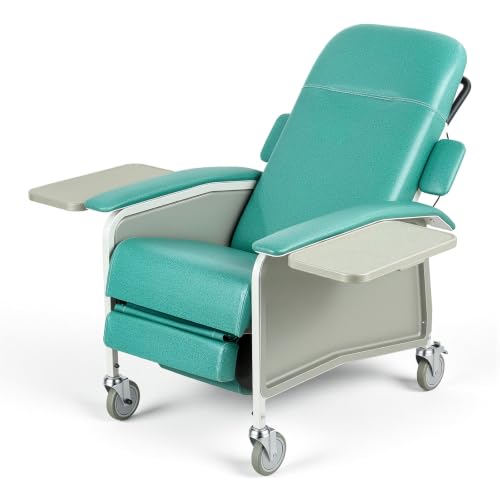
- 500 lb capacity with carbon steel frame
- 4 recline positions including Trendelenburg
- 2 lockable rear wheels and 2 tray tables
Best For: Heavy-duty care settings needing flexible positioning
Clinical Recliner for Long Visits
Invacare Blue Ridge Clinical Recliner

- 3-position recline for upright, leg-up, or full recline
- Articulating headrest supports neck and head
- Fluid-resistant, flame-retardant upholstery
Best For: Clinical settings like dialysis or blood collection
Practical Senior Care Recliner
Medical Recliner Chair for Elderly

- 3 recline positions with lock bar security
- 5-inch casters with 2 locking wheels
- Tray locks in 5 positions and stores on side
Best For: Senior care that needs a secure tray and easy cleaning
Compact Recliner-Bed Combo
Patient Companion Chair with Wheels

- Converts from recliner to sleeper bed
- Cold-rolled steel frame with support legs
- Compact folding design for small spaces
Best For: Hospital companions and small rooms needing a sleeper chair
Premium Bariatric Recliner
3-Position Medical Recliner with Lockable Casters

- 3-position recline with tilt headrest
- 5" lockable rear casters for secure positioning
- Supports up to 500 lb with easy-wipe PU upholstery
Best For: Bariatric care, dialysis, and long-term clinical use
Compact Mobility Recliner
Reclining Wheelchair with Elevating Leg Rests

- True 180-degree recline for full support
- 16-inch seat improves indoor maneuverability
- Leg rests and head support add recovery comfort
Best For: Indoor recovery and tighter spaces
Heavy-Duty Comfort Recliner
Bariatric Geri Chair on Wheels

- Supports up to 500 lb with steel frame
- Medical-grade locking casters for stability
- Foldable tray and footrest add convenience
Best For: Bariatric care and routine clinical positioning
Trusted Standard Geri Care
Lumex 3-Position Medical Recliner

- 3-position reclining for upright to full rest
- Smooth-rolling wheels for easier room transfers
- Steel frame supports up to 250 lbs
Best For: Hospitals, geriatric care, and assisted positioning
Heavy-Duty Mobility Pick
VEVOR 3-Position Geri Chair Recliner

- Three recline positions plus elevated leg rest
- 2 lockable rear wheels for added stability
- Includes detachable tray and easy-clean surfaces
Best For: Hospitals, nursing homes, and home care with lockable rear wheels
Locking Wheel Value Choice

- 3 seating positions with retractable foot rest
- 2 locking wheels for safer positioning
- Includes meal tray for daily activities
Best For: Nursing homes, dialysis use, and long-term home care
Heavy-Duty 4-Position Recliner – VEVOR 4-Position Geri Reclining Chair
If you need locking wheel medical recliner chairs for flexible patient positioning, this VEVOR geri chair covers the basics well. It offers four recline modes, a 500 lb capacity, and rear lockable casters for controlled movement in hospitals, rehab settings, or home care.
Best For: Heavy-duty care settings that need multiple recline positions and easy mobility.
Pros:
- 4-position adjustment includes upright, deep recline, elevated leg rest, and Trendelenburg.
- 500 lb capacity with a powder-coated carbon steel frame for stable support.
- 4-inch casters include 2 lockable rear wheels for secure positioning.
- Comes with 2 side tray tables for keeping essentials close.
Cons:
- Heavier chair at 98.3 lb, so moving it may take effort.
- Wheels are only lockable on the rear pair, not all four casters.
Overall, this is a practical option when you want a high-capacity medical recliner with multiple positioning options and dependable mobility control. The added trays and easy-clean padded build make it useful for daily caregiving tasks.
Clinical Recliner for Long Visits – Invacare Blue Ridge Clinical Recliner
For locking wheel medical recliner chairs in clinical use, the Invacare Blue Ridge focuses on durability, comfort, and easy movement. Its three-position design, articulating headrest, and four rolling casters make it a straightforward fit for blood collection, dialysis, and other long-stay appointments.
Best For: Clinics that want a durable recliner for prolonged patient positioning.
Pros:
- Three recline positions support upright sitting, leg elevation, and full recline.
- Articulating headrest adds neck and head support during extended use.
- Four rolling casters and a push bar help with movement.
- Fluid-resistant, flame-retardant upholstery is easy to maintain.
Cons:
- 250 lb capacity is lower than some heavy-duty geri chairs.
- Does not include trays or more advanced positioning like Trendelenburg.
This is a solid clinical recliner if you value proven functionality and low-maintenance materials over extra features. It stays focused on patient comfort and practical transport in busy care environments.
Practical Senior Care Recliner – Medical Recliner Chair for Elderly
This standard model is a good pick if you want locking wheel medical recliner chairs with simple operation and caregiving-friendly details. It has three reclining positions, 5-inch casters with two locks, and a locking tray that can be adjusted in multiple positions.
Best For: Senior care environments that need a practical recliner with a secure tray and easy-clean design.
Pros:
- Three positions: upright, deep recline, and elevated leg/footrest.
- 5-inch casters with 2 locking wheels for movement and stability.
- Large attached tray locks in 5 positions and stores on the side.
- Steel frame, pop-off side panels, and moisture barrier help with cleaning and maintenance.
Cons:
- 250 lb weight capacity may not suit larger users.
- More basic than 4-position models with Trendelenburg support.
Overall, this chair balances comfort and convenience without adding unnecessary complexity. The secure tray and maintenance-friendly build make it especially useful in everyday elder care.
Compact Recliner-Bed Combo – Patient Companion Chair with Wheels
Not every locking wheel medical recliner chair is a standard geri chair, and this one is built as a companion seat that converts into a bed. It is a practical choice for hospital rooms or small spaces where you need a recliner by day and a sleeper by night.
Best For: Caregivers or patient companions who need a compact recliner-bed combination.
Pros:
- 2-in-1 design converts from recliner to sleeper chair bed.
- Cold-rolled steel frame and support legs add stability.
- Rear caster wheels allow smooth movement and positioning.
- Compact folding design suits tight rooms and limited storage.
Cons:
- Not a traditional medical recliner with multiple patient recline positions.
- Wheels are described as rear casters rather than locking casters.
If your priority is overnight flexibility rather than clinical recline adjustments, this chair makes sense. It keeps the footprint manageable while offering both sitting and sleeping functions in one unit.
Premium Bariatric Recliner – 3-Position Medical Recliner with Lockable Casters
If you’re comparing locking wheel medical recliner chairs for long care shifts, this bariatric geri chair stands out for its 3-position recline, tilt-adjustable headrest, and smooth transport setup. It is built for patients who need a stable chair for resting, dialysis, recovery, or all-day seated comfort.
Best For: Bariatric users, clinical settings, and caregivers who need a heavy-duty recliner with secure mobility and easy repositioning.
Pros:
- 3 recline modes with elevated leg rests for upright sitting, partial recline, or deep rest
- 5″ lockable rear casters plus front directional wheels for easy movement and stable placement
- 500 lb capacity with a rust-proof steel frame and wipe-clean PU upholstery
- Detachable overlapping tray and separate swing-out foot pedals add daily convenience
Cons:
- At 99.2 lb, it is a heavy chair to handle without caregiver assistance
- The larger frame may be less suitable for tight home spaces
This is a practical option when durability, hygiene, and locking mobility matter more than a lightweight design. Its features are clearly aimed at facilities and caregivers who need dependable support for extended use.
Compact Mobility Recliner – Reclining Wheelchair with Elevating Leg Rests
For shoppers looking at locking wheel medical recliner chairs with a wheelchair-style frame, this Vive Mobility model combines a true 180-degree recline with a narrow 16-inch seat. It is designed for users who need pressure relief, leg support, and easier handling in tighter indoor spaces.
Best For: Seniors or adults who want a narrower reclining chair for recovery, rest, or indoor maneuverability.
Pros:
- Reclines to 180 degrees for full-body support and resting comfort
- Narrow 16-inch seat helps with maneuvering through hallways and doorways
- Elevating leg rests with dual calf pads can help reduce swelling
- Headrest and detachable cervical cushion improve neck and head support
Cons:
- 300 lb weight limit is lower than bariatric geri chair options
- The slim seat may not suit users who prefer a roomier fit
This is a strong pick if you need reclining comfort without a bulky footprint. It leans more toward indoor mobility and supportive positioning than heavy-duty bariatric capacity.
Heavy-Duty Comfort Recliner – Bariatric Geri Chair on Wheels
If you need locking wheel medical recliner chairs with a higher weight capacity, this VivaComfort bariatric geri chair is built around comfort, stability, and caregiver-friendly mobility. It pairs thick cushions and lever-controlled recline with locking casters and a rear push handle for everyday facility use.
Best For: Bariatric patients and care teams that want a stable recliner with tray support and smooth room-to-room movement.
Pros:
- 500 lb capacity with a powder-coated steel frame for durability
- Medical-grade locking casters provide secure positioning and smooth mobility
- Foldable side tray and footrest add useful surfaces for meals or therapy
- Padded rear push handle helps caregivers move the chair more easily
Cons:
- No detailed recline position count is listed in the supplied notes
- At 97.8 lb, it is still a substantial chair to move manually
This model focuses on dependable support and day-to-day usability rather than compact portability. It fits well in settings where a sturdy, locking medical recliner is expected to stay in service regularly.
Trusted Standard Geri Care – Lumex 3-Position Medical Recliner
Lumex 3-Position Medical Recliner, Reclining Geri Chair with Wheels, Royal Blue
Check Price On AmazonFor shoppers comparing locking wheel medical recliner chairs, the Lumex 3-Position Medical Recliner is a straightforward healthcare option built around comfort, mobility, and caregiver-assisted positioning. Its 3-position design supports upright time, partial recline, or full recline, while the rolling base helps move it between rooms in a care setting.
Best For: Hospitals, geriatric care, and home users who want a trusted 3-position medical recliner with easy room-to-room mobility.
Pros:
- 3-position reclining supports mealtime, visits, and rest
- Smooth-rolling wheels make room-to-room movement easier
- Multi-density foam and contoured support aim for all-day comfort
- Durable steel frame supports up to 250 lbs
Cons:
- Position lock requires caregiver assistance
- Armless design may feel less enclosed than some users prefer
- Assembly is required
Overall, this Lumex geri chair is best suited to established care environments that value a familiar design and practical support features over extra frills. It offers the core functions many buyers want in a medical recliner with wheels.
Heavy-Duty Mobility Pick – VEVOR 3-Position Geri Chair Recliner
The VEVOR Geri Chair Recliner is a practical choice for anyone shopping for locking wheel medical recliner chairs with strong mobility features and easy-to-clean surfaces. It offers 3 reclining positions, a movable frame, and a tray, making it useful for resting, reading, meals, and everyday care routines.
Best For: Hospitals, nursing homes, and home care situations that need a movable 3-position recliner with lockable rear wheels.
Pros:
- 3-position adjustment includes upright, deep recline, and elevated leg rest
- Four 5-inch casters include 2 lockable rear wheels for secure positioning
- Three-layer seat structure is designed for comfort and easy cleaning
- Includes a detachable HDPE tray for meals or reading
Cons:
- At 86.6 lbs, it is much heavier than some alternatives
- Assembly is required
- Weight capacity is limited to 250 lbs
In short, this chair stands out for combining mobility and wheel locking with a caregiver-friendly tray and durable frame. It is a solid fit when secure placement and daily practicality matter more than a lightweight build.
Locking Wheel Value Choice – ProHeal 3 Position Geri Chair
The ProHeal 3 Position Geri Chair is designed for buyers who want a simple medical recliner with wheels and locking casters for safer positioning. It provides three standard seating modes, a meal tray, and a compact footprint that works well in nursing care and home care settings.
Best For: Nursing homes, medical facilities, dialysis use, and long-term home care that need a compact recliner with locking wheels.
Pros:
- 3 positions support upright, TV watching, and full recline
- 4 casters include 2 locking wheels for added safety
- Retractable foot rest adds comfort in recline positions
- Meal tray supports reading, computer use, and dining
Cons:
- No weight capacity over 250 lbs
- Bulky 105.8 lb build may be harder to move without assistance
- Basic feature set may feel minimal for some buyers
This ProHeal model is a good fit if you want the essentials: multiple recline modes, secure wheel locking, and a tray for everyday tasks. Its compact size and care-focused layout make it a sensible option for regular use.
How We Picked the Best Locking Wheel Medical Recliner Chairs
We prioritized models that combine secure rolling and reliable locking with useful recline ranges, durable construction, and caregiver-friendly details. That means looking at weight capacity, seat comfort, upholstery cleanup, tray compatibility, foot support, and whether the chair is better suited to home care, clinical use, or bariatric needs.
We also favored chairs with clear positioning options, since a good medical recliner should support more than just sitting. For many users, the ability to recline, elevate legs, or tilt for comfort can improve daily usability and reduce transfers.
Quick Comparison
Broadly speaking, these chairs fall into a few groups: standard 3-position geri chairs for everyday care, more adjustable models with Trendelenburg or extra positioning, heavy-duty and bariatric chairs for higher capacities, and convertible chair-bed styles for rooms where occasional sleeping space matters.
If you want the simplest all-around pick, look for a 3-position model with lockable casters and a tray. If durability and capacity are the priority, step up to a bariatric option. If the user spends long hours seated, padding, head support, and leg rest adjustability become more important than anything else.
Key Buying Factors for Locking Wheel Medical Recliner Chairs
1. Wheel Locks and Stability
The locking system should hold the chair firmly during transfers, meals, and treatment. Check whether the casters are rear-locking, all-wheel, or paired with separate braking controls. Strong locks are essential on smooth floors where unwanted movement can happen quickly.
2. Recline and Positioning
Not all medical recliners offer the same positions. A 3-position design is common, but some chairs add more angles or Trendelenburg capability. Choose the range that matches the user’s routine: eating upright, resting semi-reclined, or lying back for longer sessions.
3. Weight Capacity and Frame Strength
Weight rating is one of the most important safety filters. Standard chairs may work for lighter users, while bariatric models offer the extra strength needed for larger adults. A higher capacity often means a wider frame and more reinforced components.
4. Comfort and Support Features
Look for padded seats, supportive headrests, elevating leg rests, and arm support that makes transfers easier. If the user stays seated for extended periods, pressure relief and posture support should rank high on the list.
5. Cleaning, Accessories, and Care Setting
Removable trays, wipeable upholstery, and easy-access controls are especially useful in home health and hospital settings. For the best fit, think about who will use the chair, how often it will move, and whether meals, therapy, or overnight rest are part of the daily routine.
Who Should Buy Which Locking Wheel Medical Recliner Chairs?
Choose a standard locking wheel medical recliner chair if you need everyday comfort, mobility, and a tray for meals or activities. Pick a bariatric model for higher weight support and wider seating. Consider a convertible sleeper-style chair if the room needs occasional overnight functionality. For clinical environments, prioritize durable materials, secure locks, and position control over extra features.
In short, the best chair is the one that matches the user’s mobility, support needs, and care setting without adding complexity you will not use.