Choosing the right transfer aid can make daily care safer, faster, and less physically demanding for both users and caregivers. The best options support controlled standing, pivoting, and short transfers without adding unnecessary complexity.
This roundup of manual sit to stand transfer aids focuses on practical features that matter most in real use: stability, fit, ease of positioning, and suitability for the user’s strength and care environment.
Best 10 Manual Sit to Stand Transfer Aids Picks for 2026
Heavy-Duty Manual Sit-to-Stand Support
ArjoHuntleigh Sara Stedy 400 lb Aid
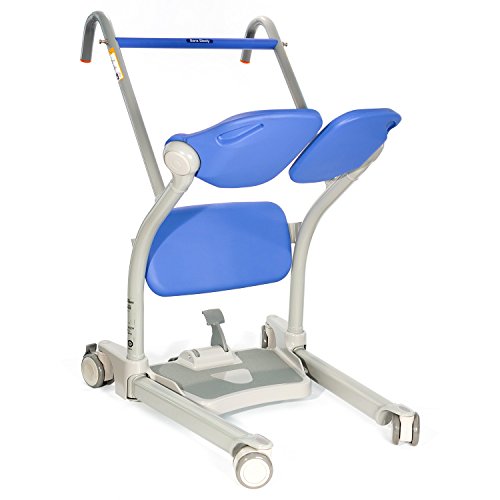
- 400 lb capacity for assisted transfers
- Arrives fully assembled for immediate use
- Sized for users 4'11" to 6'6"
Best For: A sturdy ready-to-use aid for assisted sit-to-stand transfers
Pivot Transfer Aid for Controlled Moves
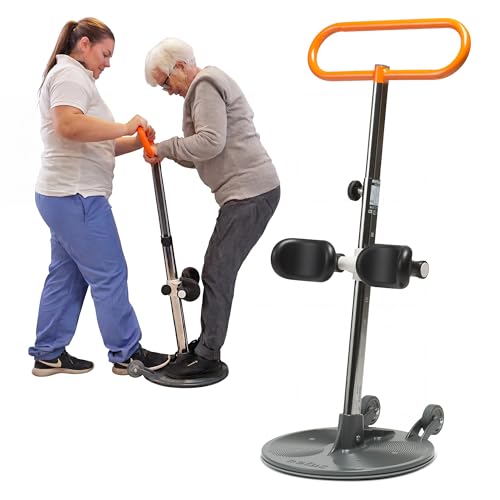
- For standing pivot transfers, not lifting
- 440 lb capacity with swivel base
- Adjustable leg supports for stability
Best For: Users who can stand and need guided pivot transfers
Compact Sit-to-Stand Assistance
Arjohuntleigh Sara Stedy Compact

- Compact frame for tighter spaces
- 400 lb capacity and fully assembled
- Sized for users 4'6" to 5'8"
Best For: Smaller rooms needing a ready-to-use standing aid
Transport-Friendly Stand Assist Lift

- Supports assisted transfers and transport
- Fits through most doorways
- Two locking rear casters for control
Best For: Users who can bear partial weight and need versatile transfers
Adjustable Transfer Support
PERLECARE Sit to Stand Lift for Elderly

- Adjustable seat and knee pad heights
- Safety strap and stable frame design
- Lockable casters for easy room-to-room moves
Best For: users who want a customizable sit-to-stand aid with wheels
Heavy-Duty Transport Lift
Stand Assist Patient Transport Unit

- 400 lb capacity with steel frame
- Adjustable height and base width
- Dual locking brakes for controlled rolling
Best For: home or facility transfers needing a heavy-duty frame
Trusted Classic Stand Aid

- 400 lb steel-frame support
- Padded seat, knee pads, and handbars
- Made for active user participation
Best For: adults and seniors needing reliable standing support
Heavy-Duty Manual Lift
Adjustable Sit-to-Stand Transfer Lift
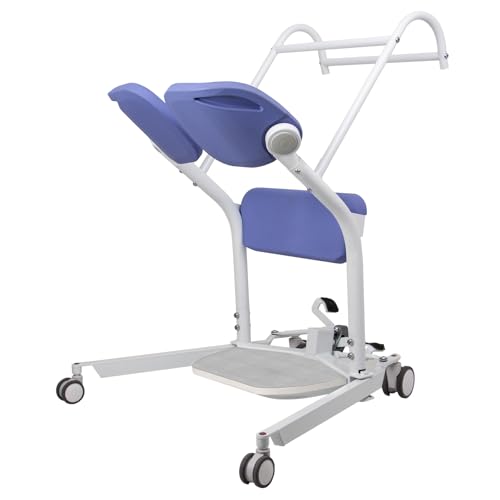
- 400 lb capacity with carbon steel frame
- Adjustable base fits toilets and wheelchairs
- Pivoting seat and lockable rear casters
Best For: Home caregivers needing a sturdy manual transfer aid
Comfort Grip Stand Assist
Vive Transfer Stand-Assist with Sling

- Supports users bearing 60% to 70% of body weight
- 400 lb steel frame with cushioned contact points
- Dual locking brakes and strap hooks
Best For: Routine home transfers where comfort and control matter
Secure Home Transfer
Vive Mobility Sit-to-Stand Patient Lift

- Supports users bearing 60% to 70% of body weight
- 400 lb steel frame with foam-grip handrails
- Dual brakes and side strap hooks
Best For: Home or facility users who need a standard stand-assist lift
Heavy-Duty Manual Sit-to-Stand Support – ArjoHuntleigh Sara Stedy 400 lb Aid
If you need manual sit to stand transfer aids for safer everyday transfers, the ArjoHuntleigh Sara Stedy is built around stability and straightforward caregiver support. It is a fully assembled stand assist device designed to help users rise and move with assistance, while keeping handling simple in homes or care settings.
Best For: Users who need a sturdy, ready-to-use sit-to-stand aid for assisted transfers and standing support.
Pros:
- Supports up to 400 pounds for a broad range of users.
- Fully assembled, so it is ready to use right away.
- Designed to help caregivers assist with sit-up and stand transfers.
- Suitable for users from 4’11” to 6’6″.
Cons:
- Designed for assisted standing, not for unsupported transfers.
- Its 65-pound frame is substantial to move and position.
The Sara Stedy is a practical pick when reliability and immediate deployment matter most. For buyers comparing manual sit to stand transfer aids, its high weight capacity and fully assembled design make it a straightforward option for safer daily assistance.
Pivot Transfer Aid for Controlled Moves – Etac Turner PRO Standing Aid
The Etac Turner PRO is a manual sit to stand transfer aid for users who can bear weight, stand, and follow instructions while a caregiver guides the pivot. It is made for safe standing transfers between seats, beds, wheelchairs, or toilets, with a compact design that works well in tight spaces.
Best For: Users with some leg and upper-body strength who need a stable standing pivot transfer aid.
Pros:
- Supports standing pivot transfers between common seated positions.
- 440 lb load capacity with a compact, maneuverable frame.
- Adjustable leg supports help improve stability and fit.
- Swivel function and anti-slip base plate help control turning.
Cons:
- Not a lifting device and requires the user to stand.
- Needs users who can communicate and follow transfer steps.
If the goal is a controlled pivot rather than a full lift, the Turner PRO is a strong fit. It stands out among manual sit to stand transfer aids because it combines compact handling with supportive positioning for both user and caregiver.
Compact Sit-to-Stand Assistance – Arjohuntleigh Sara Stedy Compact
This compact version of a manual sit to stand transfer aid keeps the same ready-to-use approach as the larger model, but in a smaller footprint for tighter spaces. It is fully assembled and designed to help caregivers assist users with safer standing and transfer routines in home or facility settings.
Best For: Smaller spaces that still need a fully assembled sit-to-stand support aid.
Pros:
- Compact frame is better suited to tighter layouts.
- Supports up to 400 pounds.
- Fully assembled for immediate use.
- Intended for users from 4’6″ to 5’8″.
Cons:
- Smaller size narrows the intended user height range.
- Still a substantial 65-pound unit to move and position.
When space is limited, this compact option makes the same sit-to-stand support easier to fit into the room. Among manual sit to stand transfer aids, it is a good match for buyers who want the convenience of an assembled unit without the larger footprint.
Transport-Friendly Stand Assist Lift – 400 lb Patient Transfer Unit
This stand assist unit is designed for patients who can bear enough weight to support about 60-70% of their body weight during assisted transfers. As a manual sit to stand transfer aid, it combines sit, stand, transfer, and transport functions in a compact frame meant for home use and facilities.
Best For: Assisted transfers for users who can partially support themselves during standing movement.
Pros:
- Helps reduce fall risk during transfers.
- Works between beds, wheelchairs, and toilets.
- Compact and narrow frame fits through most doorways.
- Two locking rear casters add safety and control.
Cons:
- Requires the user to support 60-70% of body weight.
- Best suited to assisted transfers rather than full lifting.
This unit is a versatile choice if you want one device that can handle several transfer scenarios. For shoppers comparing manual sit to stand transfer aids, its doorway-friendly frame and safety-focused base make it a practical pick for routine use.
Adjustable Transfer Support – PERLECARE Sit to Stand Lift for Elderly
If you’re comparing manual sit to stand transfer aids for home use, this PERLECARE lift stands out for its adjustable fit and added stability features. It is built to help with bedside, sofa, wheelchair, and toilet transfers while giving caregivers more control during everyday moves.
Best For: Users and caregivers who want a customizable sit-to-stand aid with lockable casters for room-to-room transfers.
Pros:
- Adjustable seat and knee pad heights help align the hips and knees for a more tailored transfer.
- Safety strap adds support when the user is not fully seated or during the transfer process.
- Four casters and lockable wheels make it easier to move between beds, sofas, wheelchairs, and toilets.
- 26.5-inch doorway width helps it fit through most standard doorways.
Cons:
- Requires sufficient upper and lower body strength from the user.
- At 64.6 pounds, it is not a lightweight aid.
- Best suited to active transfers rather than fully passive lifting.
This is a practical choice if you want a manual-style transfer aid with configurable support points and a stable frame. The design focuses on making sit-to-stand moves smoother while reducing strain on caregivers.
Heavy-Duty Transport Lift – Stand Assist Patient Transport Unit
For shoppers comparing manual sit to stand transfer aids, this transport unit is built around strength, adjustability, and safer rolling transfers. It supports a wide range of indoor sit-to-stand moves in homes or care facilities, with a focus on stability and comfort.
Best For: Home or facility transfers where a heavier-duty frame and higher weight capacity are priorities.
Pros:
- Supports up to 400 lb with a precision-welded, powder-coated steel frame.
- Adjustable height and base width help adapt the unit to different users and spaces.
- Dual locking brakes improve security and controlled rolling over carpet, tile, and wood floors.
- Cushioned knee pads and seat add comfort during transfers.
Cons:
- Base width expands to 36.4 inches, so it may be less convenient in tighter spaces.
- It is designed for users who can participate in the transfer process.
- Heavier steel construction may make it less portable than simpler aids.
This model makes sense when durability and a higher capacity matter more than compact size. The adjustable frame and locking brakes give it a practical profile for repeated daily transfers.
Trusted Classic Stand Aid – Lumex LF1600 Stand Assist
Among manual sit to stand transfer aids, the Lumex LF1600 is a straightforward option for users who can actively participate in standing. It combines supportive padding, a strong steel frame, and maneuverability that works well in many home care settings.
Best For: Adults and seniors who want a reliable stand assist for active sit-to-stand support.
Pros:
- Supports users up to 400 lb with a heavy-duty steel frame.
- Cushioned knee pads, ergonomic handbars, and a padded seat improve comfort.
- Designed to reduce caregiver strain during transfers.
- Fits users from 5’1″ to 6’6″ while remaining maneuverable through most doorways.
Cons:
- Designed for active user participation, so it is not a fully passive lift.
- No wheel or brake details are highlighted in the supplied notes.
- Best suited to users who can bear some of their own weight.
The LF1600 is a no-frills option that focuses on dependable standing support and caregiver relief. Its long track record and broad size range make it an easy model to consider for everyday transfers.
Heavy-Duty Manual Lift – Adjustable Sit-to-Stand Transfer Lift
If you’re comparing manual sit to stand transfer aids for home use, this lift is built for users who need a sturdy assist between beds, wheelchairs, toilets, and sofas while still being able to participate in the transfer. The pedal-adjustable chassis and pivoting seat design are aimed at making positioning easier for caregivers, while the steel frame adds a more heavy-duty feel.
Best For: Home caregivers who need a manual, high-capacity transfer lift for moderate-mobility users.
Pros:
- 400 lb weight capacity with thickened carbon steel construction
- Adjustable chassis from 20″ to 34″ for access around toilets and wheelchairs
- Pivoting seat mechanism helps reduce effort during loading
- Four mute casters, with lockable rear wheels, support floor and carpet movement
Cons:
- Requires enough user strength for a stand-assist transfer, not full lifting
- Large frame may be harder to manage in tighter spaces
- At 75 pounds, it’s a substantial piece of equipment
This is a practical pick if capacity and stability matter more than compact size. The double cross bars and curved seat/knee pads are thoughtful touches, but the overall format is best suited to users and caregivers who can handle a larger manual transfer system.
Comfort Grip Stand Assist – Vive Transfer Stand-Assist with Sling
For buyers evaluating manual sit to stand transfer aids, this Vive stand-assist is designed for patients who can support about 60% to 70% of their body weight and need help moving between common seated surfaces. It focuses on safer transfers with a steel frame, cushioned contact points, and dual locking brakes for more controlled use at home or in care settings.
Best For: Seniors or adults who can partially stand and need a secure transfer assist for everyday moves.
Pros:
- Supports users who can bear 60% to 70% of body weight
- 400 lb capacity with strong steel frame
- Foam handrails, cushioned shin rests, and split seat pads
- Dual locking brakes and side strap hooks add stability
Cons:
- 26-inch base may not fit narrow doorways
- Still requires the user to stand enough for a transfer
- Measured fit is important before purchase
This model makes sense when comfort and secure handling are priorities. The padded grips and braking system are useful in routine transfers, but the doorway-width warning is important if your home layout is tight.
Secure Home Transfer – Vive Mobility Sit-to-Stand Patient Lift
If you need manual sit to stand transfer aids for home care, this Vive Mobility lift follows the same stand-assist approach as the brand’s other model, with support for users who can bear around 60% to 70% of their body weight. It’s intended for moving between beds, wheelchairs, toilets, and sofas, while the foam handrails, cushioned shin rests, and dual braking system help keep transfers controlled.
Best For: Home or facility transfers for users who can partially stand and need a familiar stand-assist setup.
Pros:
- Designed for users who can support 60% to 70% of body weight
- 400 lb capacity with steel frame construction
- Foam-grip handrails and cushioned seat/shin contact points
- Dual locking brakes and side support strap hooks
Cons:
- 26-inch base may be too wide for some doorways
- Requires enough standing ability for safe use
- Heavier equipment may be less convenient in smaller spaces
This is a straightforward option if you want a proven stand-assist layout and don’t need extra features beyond stability and comfort. Just be sure to check doorway clearance before buying, since that base width is a key fit factor.
How We Picked These Manual Sit to Stand Transfer Aids
We focused on Manual Sit to Stand Transfer Aids that are designed for assisted standing and short-distance transfers in home care or facility settings. Priority went to models with clear weight capacity, stable base design, ergonomic support points, and features that help reduce strain during transfers.
We also considered setup simplicity, maneuverability in tighter spaces, and whether the design suits common transfer tasks such as chair-to-chair, bed-to-chair, or toilet transfers.
Quick Comparison: What Matters Most
At a glance, the main differences usually come down to support style and patient mobility. Some devices are better for users who can bear weight and assist with standing, while others are built for more controlled pivot transfers or added caregiver help. Compact frames can be easier in small rooms, but wider bases may offer more confidence and stability.
Key Buying Factors for Manual Sit to Stand Transfer Aids
User Weight-Bearing Ability
These aids are not for fully passive transfers. The user should generally be able to participate in standing or shifting weight. If the person cannot bear enough weight or follow instructions, a different lifting solution may be safer.
Fit, Clearance, and Adjustability
Check seat height, knee support, handle positioning, and chassis width. For Manual Sit to Stand Transfer Aids, adjustability matters because it affects comfort, posture, and whether the device works in bathrooms, bedrooms, and narrow hallways.
Stability and Mobility
Look for lockable casters, a solid frame, and a footprint that feels balanced during turns and short moves. Good mobility should not come at the expense of control.
Care Environment
Some products are better for home caregivers who need occasional help with transfers, while others are more suitable for routine daily use. Think about doorway width, floor surfaces, and whether the aid needs to move between rooms or stay in one area.
Who Should Buy Which Manual Sit to Stand Transfer Aids?
If the user can assist with standing and needs help moving from one seated position to another, a transfer aid or standing pivot device is often the best fit. If the main need is short, safe repositioning with caregiver support, choose a model that prioritizes stability and easy handling. For heavier users or higher-frequency use, look for stronger weight ratings, more robust frames, and better adjustment range.
In short, the best Manual Sit to Stand Transfer Aids match the user’s mobility level, the caregiver’s strength, and the layout of the space. That balance matters more than any single feature.