Choosing the right treadmill for recovery is about more than speed and price. For walking rehab, stability, handrail support, low starting speeds, and gentle control matter most.
This roundup highlights 10 medically oriented options designed to help users build confidence, improve gait, and progress safely at home or in supervised environments.
Best 10 Medical Treadmills for Walking Rehabilitation Picks for 2026
Rehab-Ready Walking Support
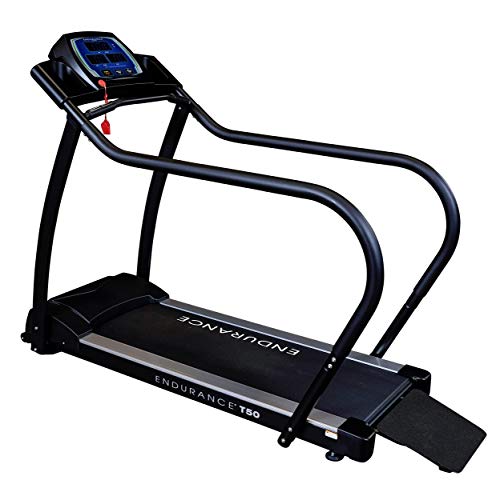
- Starts at 0.1 mph for very gradual rehab walking
- Wide belt, rear ramp, and padded handrails improve stability
- 310 lb capacity with LED tracking for core walking metrics
Best For: Users needing a sturdy, slow-start rehab treadmill for home or light commercial walking
Compact Senior Walker

- Extended handrails support balance and safer walking
- 0.5 mph minimum speed with 3 manual incline levels
- Foldable, wheeled frame is designed for small spaces
Best For: Seniors and rehab walkers in apartments or smaller rooms
Quiet Recovery Companion

- Extra-long handrails offer continuous support
- Shock-absorbing belt and deck help reduce joint impact
- LED display plus app control for guided walking sessions
Best For: Recovery walkers who want stability, cushioning, and app-based training
Space-Saving Senior Support
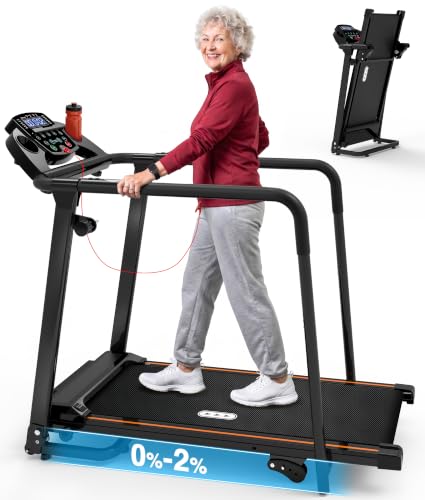
- Long handrails and 0.5 mph start suit rehab walking
- Foldable frame and wheels make storage easier
- Mute and screen-off features keep use simple and quiet
Best For: Home users who need compact storage and steady hand support
Stable Support Walking Trainer
Extra-Long Safety Handrails Senior Treadmill

- Full-length handrails for steadier balance
- Wide cushioned belt with joint-friendly feel
- Quiet walking range with app and LED controls
Best For: Seniors and rehab users who want more support and a roomy walking surface
Ultra-Low Start Rehab Walker

- Starts at a very slow 0.3 MPH
- Front and side handrails improve stability
- Flat walking mode helps reduce knee stress
Best For: Cautious walkers and rehab users who need very slow, supported starts
Heavy-Duty Recovery Walker
400 Lb Capacity Foldable Senior Treadmill

- 400 lb capacity with reinforced frame
- 0.3 MPH start and fine speed control
- Long 47.6" belt for added stride room
Best For: Heavier or taller users needing a sturdy, supported home walking treadmill
Senior Safety Walking Treadmill

- 0.3 mph start for cautious rehab walking
- Full-length handrails plus emergency stop clip
- Quiet motor with 5-layer shock absorption
Best For: Seniors and post-surgery users needing very gentle walking support
Joint-Friendly Foldable Treadmill

- Full-length handrails with auto-stop safety key
- True 0% surface with 1-2% gradual incline
- Foldable frame with wheels for easier storage
Best For: Recovery walkers who want support, simple controls, and a foldable design
Reverse Walking Rehab Treadmill

- 0.3 mph start with forward and backward walking
- Front and side handrails for extra stability
- Flat 0% incline with app and Bluetooth control
Best For: Users working on balance, back comfort, and controlled reverse walking
Rehab-Ready Walking Support – Body-Solid T50
If you want a straightforward choice among medical treadmills for walking rehabilitation, the Body-Solid Endurance T50 leans hard into stability, low starting speed, and user-friendly controls. It is built for injury rehab and low-impact walking, with a 0.1 mph start, padded handrails, a rear entry ramp, and a wide walking belt that makes slow progression feel more secure.
Best For: Home or light commercial users who need a stable rehab treadmill with slow speed control and strong hand support.
Pros:
- Starts at 0.1 mph and goes up to 5 mph for gradual rehab pacing
- Wide 18.9″ x 53″ walking belt with rear ramp and 2″ padded handrails
- Jumbo LED display tracks time, distance, heart rate, calories, and speed
- 310 lb capacity and lifetime frame warranty for long-term use
Cons:
- Monitor is not included
- Heavier, larger footprint than compact home walkers
- Single walk-focused program set may feel basic for some users
The T50 is a practical rehab treadmill when safety, entry confidence, and slow speed progression matter more than extra workout features. It is especially appealing if you want a sturdy walking platform that feels built for recovery rather than general cardio.
Compact Senior Walker – REDLIRO JK09F
For buyers comparing medical treadmills for walking rehabilitation in smaller homes, the REDLIRO JK09F stands out for its compact frame and senior-friendly support rails. It combines a 0.5 mph minimum speed, three manual incline levels, and simple tracking features, making it a practical option for gentle daily walking and recovery routines.
Best For: Seniors or rehab users who want a space-saving walking treadmill with handrails and simple incline options.
Pros:
- Extended handrails add balance support and confidence during walking
- 0.5 mph minimum speed and 3 manual incline levels for gentle progression
- Foldable, wheeled design fits apartments and small spaces
- 12 programs plus goal tracking for distance, speed, and calories
Cons:
- Walking belt is relatively narrow and short at 39.3″ x 14.8″
- Manual incline only, so adjustments are less convenient than powered systems
- Maximum incline is limited to 2%
The JK09F is a sensible pick if your priority is a compact, easy-to-store walking treadmill with stable hand support. It is built for comfort and convenience first, with enough features to keep rehab walking simple and consistent.
Quiet Recovery Companion – Lastforever Walking Treadmill
If you need medical treadmills for walking rehabilitation with strong safety support, the Lastforever walking treadmill brings long handrails, cushioned impact control, and simple senior-friendly operation. Its 0.5 to 6 mph range, shock-absorbing build, and easy-read LED display make it well suited to walking, recovery, and light daily cardio at home.
Best For: Seniors and recovery users who want a quiet, cushioned treadmill with extra-long handrails and app guidance.
Pros:
- Extra-long handrails provide continuous support throughout the walk
- 5-layer belt, dual-layer deck, and 6 shock absorbers help reduce joint impact
- Quiet 2.5 HP motor supports walking, recovery, and light cardio
- LED display, handrail controls, and app connectivity improve ease of use
Cons:
- Maximum speed of 6 mph may be more than some rehab users need
- App connectivity adds complexity for users who prefer a very simple machine
- Includes many convenience features, which may be more than basic walkers require
Overall, this treadmill balances comfort and stability well for home rehabilitation walking. It is a strong option if you want extra hand support, reduced impact, and the flexibility of guided digital features.
Space-Saving Senior Support – Redliro T4253A
Among medical treadmills for walking rehabilitation, the Redliro T4253A focuses on compact storage, steady hand support, and simple daily use. It offers long handrails, a 0.5 mph starting speed, 0-2% manual incline settings, and a foldable frame, which makes it a practical fit for home walking and light rehab routines.
Best For: Seniors and home users who want a foldable walking treadmill with long handrails and easy controls.
Pros:
- Extended handrails support balance and safer step confidence
- 0.5 mph minimum speed and 0-2% incline suit gentle walking rehab
- Foldable frame with transport wheels saves space and improves mobility
- Mute and screen-off functions help keep use quiet and simple
Cons:
- Walking belt is compact at 39.3″ x 14.8″
- Manual incline offers only small adjustments
- Primarily aimed at walking and light jogging rather than broader training
This model makes sense if you want a no-fuss rehab treadmill that can tuck away when not in use. Its main strengths are stability, compact storage, and an easy pace for everyday walking.
Stable Support Walking Trainer – Extra-Long Safety Handrails Senior Treadmill
This walking treadmill for rehabilitation is built for users who want steady support, a wider walking area, and a gentler place to rebuild confidence at home. With extra-long handrails, a cushioned 16.5-inch belt, and a quiet low-speed range, it fits practical daily walking and light recovery routines.
Best For: Seniors, rehab walkers, and home users who want full-length handrail support and a spacious belt.
Pros:
- Full-length safety handrails help reduce fall risk and improve balance confidence.
- Wide 41.3″ x 16.5″ cushioned belt offers more room and joint-friendly comfort.
- Quiet 2.5HP motor and 0.5-7.5 MPH range support walking and light cardio.
- LED display, handrail controls, and app connectivity keep workouts simple to manage.
Cons:
- Lowest speed starts at 0.5 MPH, which may be faster than some rehab users prefer.
- At 66 pounds, it may still require effort to reposition despite transport wheels.
- Designed mainly for walking and light cardio, not advanced running training.
Overall, this is a solid pick if your priority is safe, supported indoor walking with a generous deck and easy-to-read controls. It balances stability and convenience well for everyday recovery-focused use.
Ultra-Low Start Rehab Walker – 0.3 MPH Senior Treadmill
For medical treadmills for walking rehabilitation, this model stands out for its ultra-slow 0.3 MPH start and dual handrail support. It is built for controlled, low-impact walking, with a flat setting option and simple maintenance features that make it easier to use at home.
Best For: Seniors, beginner walkers, and rehab users who need a very slow start and extra support.
Pros:
- Starts as slow as 0.3 MPH for careful, controlled rehab walking.
- Dual front and side handrails add support for balance and confidence.
- Flat walking surface option is kinder on knees and joints.
- Self-lubricating deck and built-in wheels make upkeep and moving easier.
Cons:
- Maximum speed is 5.5 MPH, so it is geared more toward walking than faster workouts.
- Weight capacity tops out at 300 lbs, which may not suit all users.
- Incline is limited to 3%, so training variety is modest.
This is a practical choice if you want a rehab-focused treadmill with one of the slowest starts in the group. Its combination of handrail support, simple controls, and low-impact design makes it especially approachable for cautious users.
Heavy-Duty Recovery Walker – 400 Lb Capacity Foldable Senior Treadmill
This walking rehabilitation treadmill is aimed at users who need a stronger frame, extra belt length, and simple assisted support at home. With a 0.3 MPH start, 400-pound capacity, and long handrails, it is built for safer walking, recovery, and daily indoor exercise.
Best For: Heavier users, taller walkers, and home rehab routines that need more deck space and capacity.
Pros:
- 400 lb capacity and reinforced frame provide a sturdy platform for larger users.
- 0.3 MPH start with 0.1 MPH adjustments supports gradual pacing.
- 47.6″ long belt gives more stride space and walking stability.
- Foldable design with soft-drop system and move wheels helps with storage.
Cons:
- At 94.3 pounds, it is heavier than many home treadmills.
- Incline only reaches 2%, so workout intensity options are limited.
- More of a walking and light rehab machine than a full training treadmill.
If you need a sturdier medical treadmill for walking rehabilitation, this one offers a useful mix of capacity, belt length, and low-speed control. It is especially appealing when stability and room to move matter more than workout variety.
Senior Safety Walking Treadmill – Ultra Slow Start Rehab Walker
If you are comparing medical treadmills for walking rehabilitation, this Phyciser model stands out for its ultra-gentle 0.3 mph start and senior-focused safety features. It is built to make stepping on, steady pacing, and low-impact walking feel more manageable for post-surgery recovery, older adults, and anyone rebuilding confidence after a break.
Best For: Seniors, post-surgery recovery, and users who want a very slow, stable walking start.
Pros:
- 0.3 mph start speed supports careful rehab pacing and reduces rush-related fall risk.
- Full-length wrap-around handrails and an emergency stop clip add confidence and support.
- 5-layer composite deck and quiet 2.5 HP brushless motor help reduce joint impact and noise.
- 300 lb capacity and 39″ x 16″ belt provide a roomy walking area for daily use.
Cons:
- Max speed tops out at 5.0 mph, so it is not aimed at serious running.
- Large safety-focused design may take more room than a basic compact walker.
This is a practical choice when the priority is comfort, control, and low-speed stability over workout variety. It fits the needs of cautious home rehabilitation walking better than a standard fitness treadmill.
Joint-Friendly Foldable Treadmill – Handrail Control Walker
For shoppers looking at medical treadmills for walking rehabilitation, this Redliro model offers a balanced mix of safety, ease of use, and space-saving convenience. Its full-length handrails, true 0% walking surface, and slow start options make it a sensible home choice for older adults or recovery users who want steady movement without unnecessary strain.
Best For: Home rehab walkers who want supportive handrails, simple controls, and a foldable frame.
Pros:
- Full-length safety handrails and auto-stop key support secure walking during rehab.
- 0-2% incline range includes a true 0% setting for a natural, joint-friendly stride.
- Handrail buttons, large display, and screen-off button make operation easier for seniors.
- Foldable design with wheels makes it easier to move and store in smaller homes.
Cons:
- Minimum speed starts at 0.5 mph, so it is not as slow as the gentlest rehab-focused models.
- Folded size still requires some storage space compared with ultra-compact units.
This treadmill makes sense if you want a straightforward walking machine that blends stability with everyday practicality. It is especially appealing for users who value handrail support and the ability to progress gradually with light incline.
Reverse Walking Rehab Treadmill – Dual Handrail Back Walker
Among medical treadmills for walking rehabilitation, this Redliro stands out for its reverse-walking option and very low 0.3 mph start. The flat deck, dual handrail setup, and multiple control methods make it a strong pick for users focusing on balance, back comfort, and careful indoor walking sessions.
Best For: Users who want reverse walking, extra handrail support, and flat-surface rehab training.
Pros:
- 0.3 mph starting speed supports slow, controlled walking in either direction.
- Front plus side handrails provide added stability and confidence during movement.
- Flat 0% incline design keeps the stride smooth and low-strain on knees and joints.
- APP, Bluetooth, and rail-button controls give users flexible ways to manage workouts.
Cons:
- Heavier at 89.8 lbs, so it may be less convenient to move than lighter walkers.
- Reverse-walking features may be more than some users need for basic rehab use.
This model is a good fit if rehabilitation goals include balance work, very slow pacing, or backward walking. Its support-focused design makes it feel more specialized than a standard walking treadmill.
How We Picked the Best Medical Treadmills for Walking Rehabilitation
We focused on Medical Treadmills for Walking Rehabilitation that emphasize safety, support, and ease of use. Priority factors included ultra-low starting speeds, sturdy frames, long handrails, higher weight capacities, foldability, and recovery-friendly features such as shock absorption or gentle incline settings. We also favored models that can serve seniors, post-injury users, and home rehab setups without requiring advanced training.
Quick Comparison
The biggest differences in this category usually come down to support style and recovery intensity. Some models are built for simple walking with extra-long rails and easy controls, while others add features like backward walking, app connectivity, or stronger load ratings. If balance is a concern, rail length and placement matter more than extra workout functions. If space is limited, a compact foldable frame may be the deciding factor.
Key Buying Factors for Medical Treadmills for Walking Rehabilitation
Safety and Stability
Look for a wide, stable base, secure handrails, and a smooth deck that starts slowly. For rehab use, a low minimum speed is especially important so users can begin comfortably and reduce the risk of overstriding or losing rhythm.
Support and Fit
Long front rails, side rails, and easy-to-reach controls can make a major difference during gait retraining. Choose the rail layout that matches the user’s balance needs and supervision level.
Progression Features
Gentle incline, shock absorption, and consistent speed control can help support gradual rehabilitation progress. These features should complement therapy goals rather than make the treadmill feel overly complex.
Capacity and Space
Check weight capacity carefully and leave extra margin for safety. Also measure the room, since some rehab treadmills are larger than standard home fitness machines even when they fold.
Who Should Buy Which Medical Treadmills for Walking Rehabilitation?
If the user needs maximum reassurance, choose a treadmill with extra-long handrails and a very slow start. If the goal is home-based daily walking after injury or deconditioning, a compact foldable model may be enough. For heavier users or shared households, prioritize the highest capacity and the most stable frame. If therapy includes gait work or reverse walking, look for models that support those motions without sacrificing control.
In short, the best choice depends on how much support the walker needs today and how much progression you want built into the machine for later.