The best quiet window fans cool rooms, move stale air, and exhaust heat without becoming a distraction. This roundup compares 10 options with features such as reversible airflow, multiple speeds, thermostats, remotes, and expandable side panels.
Whether you need a bedroom fan for overnight use or a stronger whole-room ventilator, the right model depends on noise control, window fit, airflow direction, and ease of operation.
Best 10 Quiet Window Fans Picks for 2026
Flexible Comfort

- Three speeds with cooling, circulation, and exhaust modes
- Expands from 23.5 to 37 inches
- Remote, cover, and bug screen included
Best For: Flexible bedroom and living-room ventilation
Quiet Air Exchange

- Listed 49 dB low-noise operation
- Three reversible airflow modes and three speeds
- Foam seal strip, cover, bug screen, and feet included
Best For: Quieter ventilation in bedrooms and workspaces
Premium Low-Profile Pick
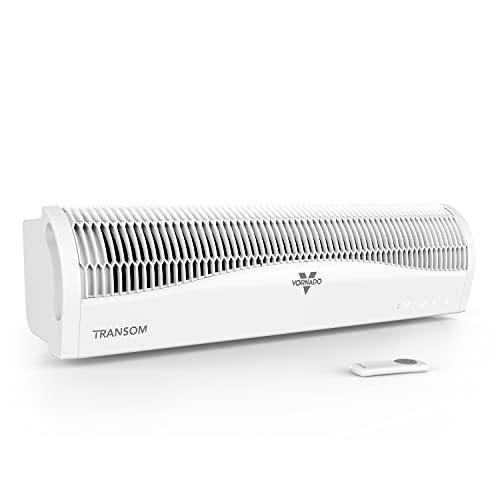
- Listed 45 dB quiet operation
- Four speeds with auto temperature control
- Low-profile fit for 26- to 40-inch windows
Best For: Quiet, streamlined room ventilation
High-Output Value
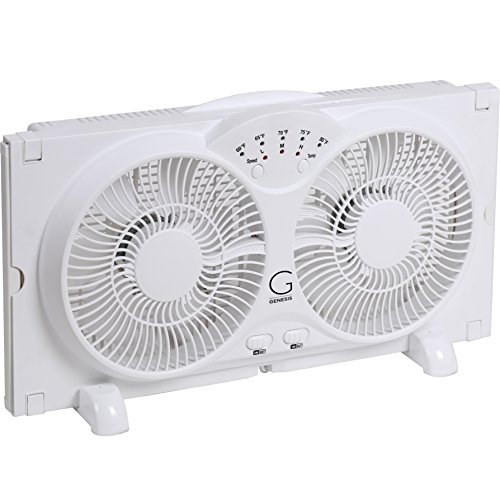
- Dual 9-inch fan heads with reversible airflow
- Three speeds and a 60-80°F thermostat
- Expandable side panels add 6.5 inches per side
Best For: High-volume cooling and thermostat-controlled ventilation
Quiet Airflow Pick

- 45 dB listed noise level with three speeds
- Touch-button intake and exhaust switching
- Fits 26–38-inch horizontal windows
Best For: Bedrooms and living spaces needing quiet, reversible ventilation
Flexible Cross-Ventilation Pick
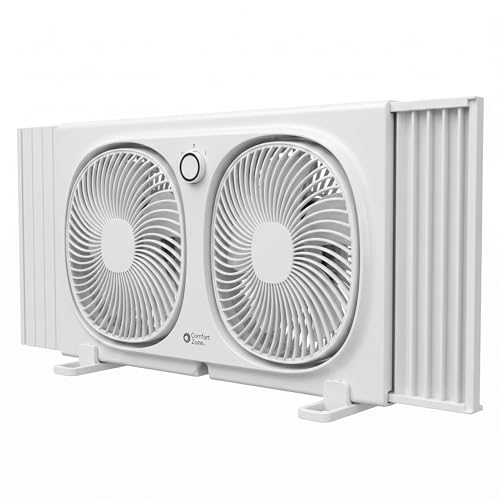
- Two 180-degree rotating fan heads
- Supports intake, exhaust, and cross-ventilation
- Tool-free fit for 21.6–33-inch windows
Best For: Rooms needing adjustable, directional airflow
Smart Control Pick
Bionaire Reversible Window Fan

- 47 dB listed noise level with three speeds
- Programmable thermostat and LED temperature display
- Remote control with 24–36-inch window fit
Best For: Bedrooms and offices needing automatic and remote control
Simple Two-Speed Choice

- Two speeds with reversible intake and exhaust airflow
- Expandable panels fit 25–32-inch windows
- Manual controls keep operation straightforward
Best For: Simple, budget-conscious window ventilation
Remote-Controlled Quiet Pick
Shinic 9-Inch Reversible Window Fan

- Three modes: intake, exhaust, and circulation
- Remote control and three speed settings
- Fits 23.5–37-inch windows with foam sealing strip
Best For: Rooms needing flexible airflow and remote operation
Quiet Thermostat Upgrade
Shinic 4-Speed Reversible Window Fan

- Four speeds with remote thermostat and timer control
- Listed 47 dB noise level with covered blades
- Spacer blocks fit 26–39.7-inch windows
Best For: Bedrooms and offices needing quieter, automated airflow
Flexible Comfort – Reversible Twin Window Fan
For shoppers comparing quiet window fans, this Comfort Zone twin-fan model offers three speeds and three airflow modes for cooling, circulation, or exhausting stale air. Its adjustable expanders fit windows from 23.5 to 37 inches, while the remote helps simplify operation from across the room.
Best For: Bedrooms and living spaces needing flexible intake, exhaust, and circulation settings.
Pros:
- Three speeds and three airflow modes support customized ventilation.
- Adjustable, locking expanders fit a broad range of window widths.
- Includes a remote, fabric cover, and bug screen.
Cons:
- Its listed 52 dB noise level is higher than some quieter options.
- The dual-fan design may require more window space than a low-profile single unit.
The Comfort Zone is a versatile choice when reversible airflow and included window accessories matter more than the lowest listed noise rating.
Quiet Air Exchange – Low-Noise Twin Window Fan
This Shinic twin fan is a strong quiet window fans contender, with a listed 49 dB noise level and three reversible airflow modes. The expandable panel fits 23.5- to 37-inch windows, and the included foam seal strip helps reduce air leaks around the installation.
Best For: Bedrooms, bathrooms, kitchens, and offices where lower-noise ventilation is a priority.
Pros:
- Three modes provide cooling intake, exhaust, or opposing-blade circulation.
- Listed 49 dB operation is comparatively quiet for a twin window fan.
- Includes a removable cover, bug screen, standing feet, and foam sealing strip.
- ETL certification and a remote add practical convenience.
Cons:
- The remote requires two AAA batteries, which are not included.
- The 70-watt motor may use more power than lower-wattage alternatives.
With useful sealing material and a broad adjustable fit, the Shinic is well suited to shoppers who want quieter dual-fan airflow with a more complete installation package.
Premium Low-Profile Pick – Vornado TRANSOM Window Fan
The Vornado TRANSOM is a low-profile option for shoppers seeking quiet window fans with electronic reversal and whole-room circulation. It offers four speeds, auto temperature control, and a listed 45 dB noise level, fitting horizontal windows 26 to 40 inches wide with its Soft-fit foam block system.
Best For: Bedrooms, home offices, and living rooms needing a compact, quieter window-mounted fan.
Pros:
- Listed 45 dB noise level supports quieter operation.
- Electronic reversal switches between fan and exhaust modes with one button.
- Four speeds and auto temperature control allow fine adjustment.
- Weather-resistant case and five-year manufacturer warranty add reassurance.
Cons:
- Its 185 CFM airflow capacity is lower than the listed capacities of several twin-fan models.
- Installation is limited to horizontal positioning and may require screen removal.
- Fits windows 26 to 40 inches wide, so it may not suit narrower openings.
The TRANSOM prioritizes a slim, refined installation and quieter operation, making it a practical premium pick when low-profile fit and simple electronic reversal are important.
High-Output Value – Genesis Reversible Twin Fan
The Genesis twin fan combines three speeds with reversible intake and exhaust airflow, making it a practical option among quiet window fans for high-volume ventilation. Its built-in thermostat spans 60 to 80 degrees, while expandable side panels help it fit a range of windows.
Best For: Shoppers who want powerful dual-fan airflow and thermostat control in a straightforward window unit.
Pros:
- Dual 9-inch fan heads support intake or exhaust airflow.
- Built-in thermostat adjusts from 60 to 80 degrees with LED indicators.
- Three speed settings provide basic airflow control.
- Expandable side panels add 6.5 inches on either side for flexible fitting.
Cons:
- No remote control is listed; operation uses button or touch controls.
- The notes do not provide a decibel rating, so quietness is harder to compare directly.
- Its 24-by-12-by-4-inch design may be less low-profile than the Vornado option.
Genesis is a sensible choice for buyers focused on strong dual-fan performance and thermostat functionality, though shoppers prioritizing documented noise levels may prefer a model with a stated dB rating.
Quiet Airflow Pick – Vornado PROFILE Window Fan
The Vornado PROFILE is a practical choice among quiet window fans when you want adjustable airflow without a bulky installation. It offers three speeds, reversible intake and exhaust operation, and a low-profile design for compatible horizontal windows.
Best For: Bedrooms, kitchens, and living spaces needing flexible ventilation with relatively quiet operation.
Pros:
- Three speed settings with a listed noise level of 45 dB.
- Switches between fresh-air intake and stale-air exhaust at the touch of a button.
- Modular soft-fit blocks accommodate windows from 26 to 38 inches wide.
- Lightweight, weather-resistant design with a window-mounted installation.
Cons:
- Designed for horizontal installation only.
- Window screen removal may be necessary depending on window depth.
- Requires a window opening at least 8 inches tall.
Choose this model if low-profile sizing, simple controls, and reversible airflow are more important than having a remote or thermostat. Verify your window dimensions and installation orientation before buying.
Flexible Cross-Ventilation Pick – Comfort Zone Twin Window Fan
The Comfort Zone Twin Window Fan suits shoppers seeking quiet window fans with independently adjustable airflow. Its two rotating fan heads can draw in cool air, exhaust warm air, or work in opposite directions for cross-ventilation.
Best For: Bedrooms, home offices, and living rooms where directional airflow and flexible ventilation matter.
Pros:
- Two independently controlled 9-inch heads rotate 180 degrees.
- Supports intake, exhaust, and cross-ventilation configurations.
- Auto-locking expanders adjust from 21.6 to 33 inches wide.
- Includes a removable bug screen and requires no tools for setup.
Cons:
- Has two speed settings rather than three.
- The listed noise level is 53.3 dB, higher than some quieter alternatives.
- Airflow direction is reversed manually by pushing the fan heads.
This model is compelling when you want to aim each fan independently or create cross-ventilation. Its expandable fit is useful, but shoppers prioritizing the lowest listed noise level may prefer another option.
Smart Control Pick – Bionaire Reversible Window Fan
The Bionaire reversible window fan combines three-speed airflow with electronic controls, a programmable thermostat, and a remote. It is a strong option among quiet window fans for shoppers who want to manage room temperature without walking to the window.
Best For: Bedrooms, home offices, and living rooms where remote operation and automatic temperature control are useful.
Pros:
- Three speeds and a listed noise level of 47 dB.
- Reversible airflow can intake fresh air, exhaust warm air, or exchange airflow simultaneously.
- Programmable thermostat automatically turns the fan on or off at a selected temperature.
- Includes a remote, LED display with dimmer function, and a three-year limited warranty.
Cons:
- Uses 120 watts, more than the other listed models.
- Its 24-inch width may require the included extender panels for larger windows.
- The feature-rich electronic design may be more than needed for basic manual ventilation.
Pick the Bionaire if convenience is a priority: the remote and programmable thermostat add control beyond basic fan speeds. Confirm that your window falls within the 24–36-inch range and that a standard outlet is available.
Simple Two-Speed Choice – Amazon Basics Twin Window Fan
If you want quiet window fans with straightforward controls, the Amazon Basics Twin Window Fan offers a practical setup for bedrooms and other small to medium spaces. Its two speeds, reversible airflow, and expandable side panels cover the essentials without adding remote or thermostat features.
Best For: Budget-minded shoppers who want simple intake and exhaust airflow for a standard-size window.
Pros:
- Two speed settings provide basic comfort control.
- Reversible operation supports either fresh-air intake or exhaust.
- Expandable panels fit windows from 25 to 32 inches wide.
- Manual push-button controls are simple to operate.
Cons:
- It has fewer speed settings than the other options here.
- No remote control or thermostat is included.
- The listed 68-watt design is intended for indoor use only.
This is a sensible pick when ease of use and basic window ventilation matter more than advanced controls. Measure your window carefully to confirm compatibility before buying.
Remote-Controlled Quiet Pick – Shinic 9-Inch Reversible Window Fan
The Shinic 9-inch model is among the more flexible quiet window fans for shoppers who want remote operation and three airflow functions. It can draw in air, exhaust hot air, or circulate air, while its listed 49 dB noise level suits rooms where moderate sound control matters.
Best For: Bedrooms, kitchens, and bathrooms where remote control, three speeds, and adjustable installation are useful.
Pros:
- Three modes support intake, exhaust, and air circulation.
- Three speed settings allow more precise airflow adjustment.
- Remote control lets you change the function or speed from a distance.
- Expandable coverage fits windows from 23.5 to 37 inches and includes foam sealing tape.
Cons:
- Remote batteries are not included.
- Its 49 dB listed noise level is not the quietest specification in this roundup.
- The wider panel range may require careful installation and sealing.
With a useful mix of remote control, reversible airflow, and flexible sizing, this Shinic fan is a strong all-purpose option. The included foam strip can also help create a tighter fit around the window.
Quiet Thermostat Upgrade – Shinic 4-Speed Reversible Window Fan
For shoppers comparing quiet window fans with more automation, this Shinic model combines four speeds, remote control, and a digital thermostat. Its listed 47 dB noise level and covered-blade, low-profile design make it well suited to bedrooms, offices, and living spaces.
Best For: Users who want quieter operation, automatic temperature control, and a broad window fit.
Pros:
- Four speed settings accommodate gentle or stronger airflow.
- Remote control works with the timer and digital thermostat.
- Listed at 47 dB, it has the lowest stated noise level of these three models.
- Six spacer blocks fit windows from 26 to 39.7 inches wide.
Cons:
- Installation is horizontal only.
- The window opening must be at least 8 inches tall.
- Remote batteries are not included.
This is the most feature-rich choice in the group, especially if you want automatic cycling instead of constant manual adjustment. Verify the horizontal installation requirements and window dimensions before ordering.
How We Picked These Quiet Window Fans
We focused on models designed for window installation and compared the features that matter most in everyday use: stated noise performance, speed control, reversible intake and exhaust modes, fit range, remote operation, thermostats, weather-resistant construction, and ease of installation. We also included both twin-fan designs and low-profile whole-room circulators so shoppers can match the fan to their room and window.
Because perceived noise varies with speed, window fit, and installation, a “quiet” rating should be treated as a useful guide rather than a guarantee. Fans are generally least noticeable on lower settings, while maximum airflow usually produces more sound.
Quick Comparison
| Feature | What to look for | Best suited to |
|---|---|---|
| Fan style | Twin fans or a low-profile circulator | Twin fans for intake/exhaust; circulators for broader room movement |
| Airflow control | Reversible airflow and separate intake/exhaust modes | Rooms that need cooling and ventilation flexibility |
| Controls | Remote, digital display, thermostat, or manual switches | Bedrooms, hard-to-reach windows, and temperature-sensitive users |
| Fit | Adjustable panels, spacers, or a stated window-width range | Windows with nonstandard dimensions |
| Protection | Weather-resistant case or secure installation | Windows exposed to occasional outdoor moisture |
Key Buying Factors for Quiet Window Fans
Noise and Speed Settings
Look for at least three speeds if you want to balance airflow and sound. A low setting is usually more appropriate for sleeping, while higher settings can quickly remove warm air. Low-noise construction helps, but rattling caused by a loose fit can be louder than the motor itself.
Reversible Airflow
Intake mode brings cooler outdoor air inside, exhaust mode removes warm or stale air, and circulate mode can move air without exchanging it directly. Reversible controls are especially useful during changing weather or when paired with another open window.
Window Fit and Installation
Measure the usable opening, not just the overall window frame. Expandable side panels and spacer blocks can accommodate wider openings, but the fan still needs a stable, reasonably sealed fit. Check whether the design suits vertical or horizontal installation before ordering.
Controls and Comfort Features
A remote is convenient for bedside adjustments, while a thermostat can cycle the fan according to room temperature. Removable covers make cleaning easier, and bug screens or covers may help reduce drafts and insects when the fan is installed.
Who Should Buy Which Quiet Window Fans?
Choose a twin reversible fan if you want straightforward intake and exhaust control, adjustable window fitting, and good value for a bedroom or small living space. Choose a low-profile whole-room model if appearance, broad air circulation, and a less intrusive window installation matter most. Choose a thermostat- and remote-equipped model for overnight use or windows that are difficult to reach. Choose a weather-resistant design when the fan will sit in a window exposed to outdoor conditions.
Before buying, confirm the window dimensions, outlet location, installation orientation, and whether the fan should be removed during rain or severe weather. These checks help ensure your Quiet Window Fans deliver comfortable airflow without unnecessary noise or installation problems.