Choosing the right lift can make fall recovery, daily transfers, and caregiver support much safer and less stressful. The best electric floor lifts for patients help users rise from the floor or move between surfaces with less strain on everyone involved.
Below, you’ll find a focused roundup of 10 options selected for weight capacity, portability, stability, ease of use, and practical home-care features.
Best 10 Electric Floor Lifts for Patients Picks for 2026
Independent Standing Aid

- 300 lb lift support
- 3.4" to 19.5" height range
- Cordless remote with large buttons
Best For: Home transfers for seniors who need help standing from low furniture or the floor
High-Capacity Floor Lift
SuperHandy 400 lb Patient Lift
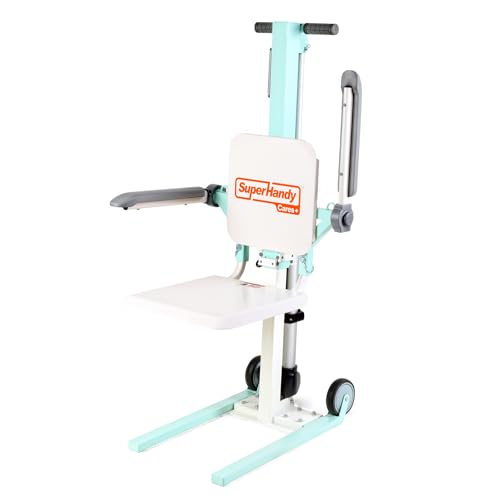
- 400 lb lifting capacity
- Battery or AC power operation
- Silent wheels for easy moving
Best For: Heavier users and home caregivers who need dependable floor-to-standing support
Waterproof Bath Lift
PPOLB Electric Waterproof Chair Lift

- IPX8 waterproof design
- 6 suction cups for stability
- Over 50 lifts per charge
Best For: Bathing support and wet-area assistance when a waterproof lift is needed
Heavy-Duty Transfer Lift

- 500 lb capacity for heavy users
- Battery and AC power options
- Quick-release safety belt included
Best For: Bariatric floor-to-standing transfers and high-capacity home care
Lightweight Floor Assist
VOCIC Lightweight Electric Chair Lift

- 23-lb build for easier handling
- Remote lift from 2.3" to 19"
- IP68 waterproofing with suction cups
Best For: Portable floor-to-seat assistance on smooth indoor surfaces
Full-Body Transfer Lift
ProHeal Electric Lift for Full Body Transfers
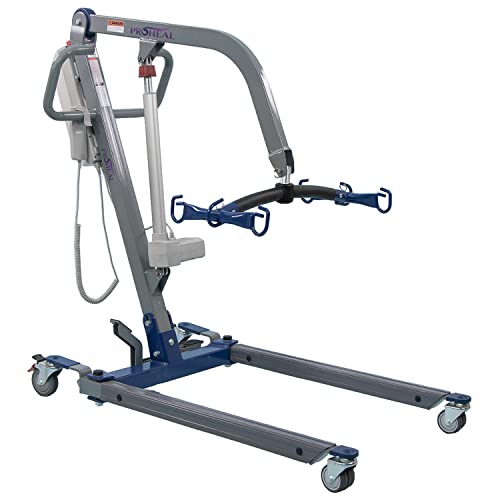
- 500-lb capacity for heavier users
- Works for floor, bed, and chair transfers
- 6-point spreader bar supports many slings
Best For: Facilities or home care needing a versatile patient transfer lifter
Portable Room Transfer Lift
VOCIC Electric Chair Lift AX35

- Four wheels for short indoor transfers
- Folds flat for easier storage
- Supports up to 350 lbs
Best For: Compact room-to-room support in homes or small care spaces
Detachable Lithium Floor Transfer Lift

- Detachable lithium handset reduces battery bulk.
- Manual crank provides emergency lowering backup.
- Adjustable base and low casters suit home layouts.
Best For: Home caregivers needing a foldable, lighter-charge floor-to-bed lift
Heavy-Duty Floor Lift Chair
Steel Electric 400 lb Lift Assist

- 400 lb steel frame for stronger support.
- Rechargeable remote avoids outlet use.
- Foldable build is easier to store.
Best For: People needing a sturdy, higher-capacity floor-to-stand lift chair
High-Capacity Floor Lift Chair
Steel Electric 440 lb Transfer Aid

- 440 lb capacity is the highest in this roundup.
- Pre-assembled for immediate use.
- Rechargeable remote keeps lifting cordless.
Best For: Home users who want a ready-to-use, high-capacity floor lift chair
Independent Standing Aid – MAIDeSITe Electric Chair Lift
If you’re comparing electric floor lifts for patients for home use, this MAIDeSITe chair lift is built for helping someone stand from the floor or another low surface with less strain on caregivers. It focuses on simple powered assistance, a lightweight remote, and a height range that can work with common furniture like sofas, armchairs, beds, and wheelchairs.
Best For: Seniors who want a compact, floor-to-chair standing aid for everyday transfers at home.
Pros:
- Supports up to 300 lbs with motorized lifting assistance.
- Height adjusts from 3.4″ to 19.5″ for use with multiple seating surfaces.
- Includes a cordless remote with large buttons for easier control.
- Built-in safety features include a non-slip pad and emergency stop button.
Cons:
- Lower capacity than heavier-duty floor lift options.
- Designed for indoor use on hard floors, not outdoor mobility.
- No assembly required, but it may still need setup guidance for first use.
Overall, this is a practical pick if the priority is helping an adult stand safely and independently from low positions rather than handling bariatric transfers. Its foldable design, safety-focused controls, and broad height range make it a useful home-care aid.
High-Capacity Floor Lift – SuperHandy 400 lb Patient Lift
For shoppers evaluating electric floor lifts for patients who need more lifting strength, this SuperHandy model stands out with a 400 lb capacity and dual power options. It’s aimed at home care, fall recovery, and caregiver-assisted transfers, with features that focus on stable lifting and easy movement around the home.
Best For: Caregivers and families needing a higher-capacity portable lift for floor-to-standing assistance.
Pros:
- Supports up to 400 lbs, making it suitable for heavier users.
- Dual power mode works with both DC battery and AC power.
- Includes foldable armrests, a safety belt, and a sloped seating platform.
- 5-inch silent caster wheels and a top handle improve portability.
Cons:
- Requires assembly before use.
- Bulkier than lighter chair-lift alternatives.
- Best suited to hard floors and indoor use.
This is a strong option if capacity, steady operation, and caregiver usability matter more than compact size. The wired remote, battery backup, and smooth lift speed make it a dependable home-care tool for raising users from the floor.
Waterproof Bath Lift – PPOLB Electric Waterproof Chair Lift
If you need electric floor lifts for patients that can also handle bath use, this PPOLB chair lift is designed for fall recovery and assisted bathing. The IPX8 waterproof design, suction-cup stability, and rechargeable remote make it a specialized option for users who need safe lifting in wet environments as well as around the home.
Best For: People who need a waterproof lift for bathtub support and floor-to-seat assistance.
Pros:
- IPX8 waterproof construction supports bath use.
- Six suction cups help anchor the lift on tile, marble, or hardwood.
- Charges in 2.5 hours and offers over 50 lift cycles per charge.
- Remote includes lift, lower, and emergency stop controls.
Cons:
- Lower 308 lb weight limit than some high-capacity alternatives.
- Most compelling for bath or wet-area use rather than general floor lifting alone.
- Plastic construction may feel less heavy-duty than metal-frame models.
This model makes sense when bathing safety and fall recovery both matter. Its waterproof build, strong surface grip, and adjustable lifting geometry give it a very specific home-care role.
Heavy-Duty Transfer Lift – SuperHandy 500 lb Floor Lift
When comparing electric floor lifts for patients who need maximum rated support, this SuperHandy GoRise model is built around a 500 lb capacity and portable home-care use. It’s intended for standing help, sitting help, and short-distance transfers, with dual power operation and a safety-focused seating design.
Best For: Bariatric users or caregivers who want the highest-capacity floor lift in this group.
Pros:
- Very high 500 lb lifting capacity.
- Dual power operation supports rechargeable battery use or AC power.
- Includes foldable armrests, a contoured sloped seat, and a quick-release safety belt.
- Magnetic wired remote keeps controls close at hand.
Cons:
- Requires assembly.
- Large footprint may be less convenient in smaller rooms.
- Primarily designed for indoor hard-floor use.
This is the most robust choice in the set if you need a lift rated for heavier users. Its combination of capacity, caregiver-friendly controls, and fallback AC power makes it a practical home-care transfer aid.
Lightweight Floor Assist – VOCIC Lightweight Electric Chair Lift
If you’re comparing electric floor lifts for patients, this VOCIC chair lift is geared toward people who need a safer way to rise from the floor without dealing with a heavy device. At 23 lbs, it’s noticeably lighter than many alternatives, yet it still supports up to 300 lbs and uses a remote-controlled height range from 2.3″ to 19″ for floor-to-seat assistance.
Best For: Caregivers and users who want a lightweight floor lift for fall recovery on smooth indoor surfaces.
Pros:
- Only 23 lbs, making it easier to move and handle than many floor lift options.
- Supports up to 300 lbs with remote-controlled lifting from low to higher seat positions.
- Six suction cups help it stay attached to smooth, hard surfaces like tile and polished wood.
- Fully encased motor and waterproof connections add protection, with an IP68 rating.
Cons:
- Designed for smooth, hard surfaces, so it may not suit every floor type.
- Weight capacity is lower than full-body patient lift systems.
- Primarily a floor-to-seat assist device rather than a transfer lift for multiple care scenarios.
This is a practical pick if portability matters most and you need a compact lift that focuses on helping someone get up from the floor. Its lightweight build and waterproof design make it stand out for home use in the right setting.
Full-Body Transfer Lift – ProHeal Electric Lift for Full Body Transfers
For buyers comparing electric floor lifts for patients, this ProHeal model is a more traditional patient lifter built for broader transfer needs. It’s designed for floor lifts, low beds, chairs, commodes, and other transfers, with a 500 lb capacity and a 6-point spreader bar that works with a variety of slings.
Best For: Home users, nursing homes, and facilities needing a full-body lift for floor and bed transfers.
Pros:
- 500 lb weight capacity for heavier transfer demands.
- Fits under most beds in the lowest position and can also perform floor lifts.
- 6-point spreader bar supports multiple sling options for different transfers.
- Safety features include dual rear locking casters, an adjustable locking base, and manual emergency lowering.
Cons:
- At 108 lbs, it is much heavier and less portable than chair-style lifts.
- Likely better suited to planned transfers than quick move-and-go use.
- Requires sling compatibility and more space than compact floor-assist devices.
This is the strongest all-around option here if you need a full-body lift rather than a simple rise-from-floor aid. Its larger frame and higher capacity make it better for ongoing caregiving setups where versatility matters.
Portable Room Transfer Lift – VOCIC Electric Chair Lift AX35
If you want electric floor lifts for patients that can also handle short room-to-room movement, this VOCIC AX35 is built around portability and control. It uses four wheels, a T-stabilized base, and secure wheel locks to support short-distance transfers while keeping the chair compact enough to store in smaller spaces.
Best For: Seniors and caregivers who need a portable lift for short indoor transfers between rooms.
Pros:
- Four smooth rollers help with short-distance transfers without lifting or carrying.
- Fold-flat seat and armrests make storage easier in tight spaces.
- Supports up to 350 lbs while staying relatively lightweight at 32 lbs.
- Wheel locks, easy-grip handles, and a T-stabilized base improve day-to-day use.
Cons:
- Designed for indoor short-distance transfers, not larger transport needs.
- Requires basic assembly.
- As a wheeled chair lift, it serves a different role than a full patient hoist.
This model makes sense if you want something more mobile than a floor-only assist lift but still easy to manage at home. It’s a practical middle ground for short transfers where stability and compact storage matter.
Detachable Lithium Floor Transfer Lift – VOCIC AY05 Home Patient Lift
For caregivers comparing electric floor lifts for patients, the VOCIC AY05 focuses on a lighter charging setup and a wide working range for home transfers. Its detachable lithium handset, manual emergency lowering, and floor-to-bed lift height make it a practical pick when you need one unit that can handle recovery, bedside transfers, and narrow home spaces.
Best For: Home caregivers who want a foldable floor-to-bed lift with a lightweight, detachable battery and backup lowering control.
Pros:
- Detachable lithium handset charges separately and avoids a heavy battery box.
- Full charge takes about 3 hours and supports up to 40 lifting cycles.
- Manual emergency crank adds a backup option during power loss.
- Adjustable base width and low-profile casters help with tight spaces and low furniture.
Cons:
- 330 lb weight limit is lower than some heavier-duty alternatives.
- Caregivers still need to verify bed height against the listed lift range.
The AY05 stands out if you want an electric patient lift that is easier to charge and easier to store than bulkier designs. It balances portability, safety backup, and home-friendly adjustments well for everyday transfers.
Heavy-Duty Floor Lift Chair – Steel Electric 400 lb Lift Assist
If you want electric floor lifts for patients with a strong focus on stability, this steel lift chair is built for floor-to-stand assistance and everyday mobility support. It pairs a 400 lb capacity with a rechargeable remote, foldable frame, and PU cushioning, making it a straightforward option for home or care-facility use.
Best For: Users who need a sturdy floor-lift chair with a higher weight capacity and simple remote operation.
Pros:
- Industrial-grade steel frame supports up to 400 lbs.
- Rechargeable remote control means no cords or outlet dependence.
- Foldable design makes storage easier when not in use.
- PU leather cushions are designed to be comfortable and easy to clean.
Cons:
- Assembly is required.
- It is less compact than a fully minimal mobility aid.
This model is a good fit when sturdiness matters most and you want a simple electric lift assist for rising from the floor. Its combination of steel construction, seat belts, and handrails makes it an appealing practical choice for assisted mobility.
High-Capacity Floor Lift Chair – Steel Electric 440 lb Transfer Aid
Among electric floor lifts for patients, this steel lift chair stands out for its 440 lb capacity and ready-to-use design. It is built for gentle floor-to-stand assistance, with a rechargeable remote, padded seating, and smooth casters that are meant to work well across indoor surfaces, including carpet.
Best For: Users who want the highest weight capacity in this group and a pre-assembled floor lift chair for home use.
Pros:
- 440 lb maximum weight recommendation offers the highest capacity here.
- Pre-assembled design means no setup is required.
- Rechargeable battery and remote keep operation cordless and simple.
- Padded seat and backrest add comfort during transfers.
Cons:
- It is designed for indoor use only.
- At 41 lbs, it may still be cumbersome to move and position.
For buyers prioritizing capacity and convenience, this model is the strongest fit in the lineup. Its pre-assembled construction and foldable frame make it especially attractive for households that want a ready-to-use lift chair without extra setup work.
How We Picked the Best Electric Floor Lifts for Patients
For this roundup, we prioritized Electric Floor Lifts for Patients that solve real home-care problems: helping someone stand after a fall, transferring between a floor and a chair, or supporting short-distance movement with less physical effort. Key factors included capacity, frame stability, wheel design, ease of folding or storing, control simplicity, and whether the lift looks practical for home or facility use.
Quick Comparison
The best choice often comes down to the user’s mobility level and the environment. Lightweight, portable models are better for tighter homes and occasional use. Higher-capacity steel lifts are better when durability and a wider safety margin matter more. If bathing or moisture exposure is a concern, water resistance becomes especially important. For caregivers who need frequent transfers, look for smoother rolling, secure handholds, and a base that feels easy to position.
Key Buying Factors for Electric Floor Lifts for Patients
Weight Capacity
Choose a lift that exceeds the user’s current weight with room to spare. This adds a useful safety margin and may improve long-term value if the lift will serve different users.
Lift Range and Transfer Style
Some models are designed mainly to raise a person from the floor to a standing or seated position, while others support fuller transfers between a floor, chair, bed, or short-distance move. Match the lift to the most common task.
Portability and Storage
If space is limited, foldable frames, lighter construction, and compact rolling designs can make a big difference. Heavier steel lifts may be more stable, but they are usually less convenient to store or move.
Safety Features
Seat belts, handrails, stable bases, and smooth wheel movement all matter. For Electric Floor Lifts for Patients, the best setup is one that reduces caregiver lifting while keeping the user secure and supported during the transfer.
Power and Controls
Look for intuitive remotes, dependable battery performance, and charging that fits your routine. Wireless controls and rechargeable systems can simplify daily use, especially in busy households.
Who Should Buy Which Electric Floor Lifts for Patients?
Choose a lightweight lift if you need occasional help after a fall or want something easier to move around the house. Pick a higher-capacity steel model if durability, stability, and repeated use are top priorities. If your needs include bathing or a wet environment, prioritize water resistance and easy-clean surfaces. For caregivers handling frequent transfers, a rolling lift with strong support features is usually the most practical option.
In short, the best model is the one that fits the user’s mobility needs, the home layout, and the caregiver’s routine without adding unnecessary complexity.