If you need a safer way to help someone move from sitting to standing, a portable lift can make daily care less stressful.
This guide focuses on practical, portable sit to stand lift devices that support transfers, reduce strain on caregivers, and fit real-world home care needs.
Best 10 Portable Sit to Stand Lift Devices Picks for 2026
Home Care Transfer Aid
Vive Mobility Sit to Stand Lift

- Supports users who can bear 60% to 70% of body weight
- 400 lb steel-frame capacity with swivel casters
- Cushioned grips, shin rests, and split seat pads
Best For: Home caregivers needing a sturdy stand-assist for everyday transfers
Ultra-Compact Stand Aid
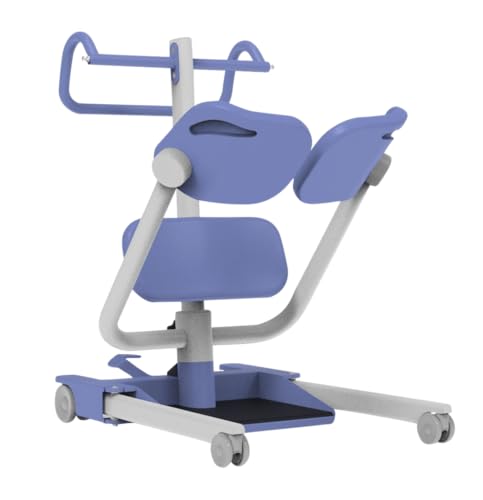
- Folds and packs for transport or storage
- 440 lb safe working load with adjustable base
- Sling-free transfers for toileting and mobility
Best For: Users who need a foldable stand-assist for tight spaces or travel
Open-Design Patient Transport

- 400 lb capacity with reinforced steel frame
- Dual-lock braking and padded contact points
- Open design for users with core upper-body control
Best For: Adults who can support their own upper body and want an open transfer aid
Adjustable Safety Transfer Aid

- Adjustable seat and knee-pad heights for better fit
- Safety strap plus lockable casters for added stability
- 26.5-inch width fits most doorways
Best For: Caregivers wanting an adjustable stand-assist with extra safety support
Heavy-Duty Home Transfer Helper

- For users who can support 60-70% of body weight
- Transfers between beds, wheelchairs, toilets, and seats
- Dual rear locking casters and dual shin pads
Best For: Home and facility transfers where safety and durability matter
Adaptive Transfer Lift
ELENKER Adjustable Sit-to-Stand Lift
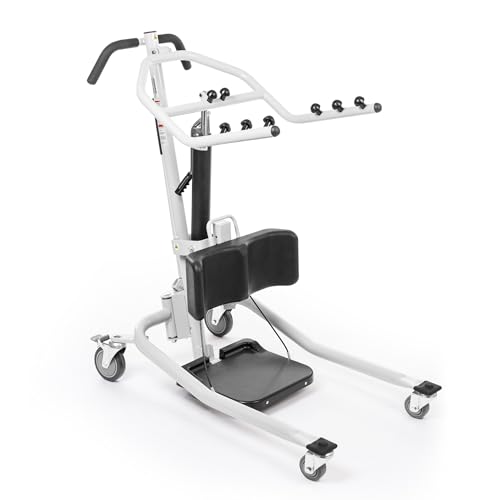
- Adjustable base width, height, and leg support
- Includes transport sling with multi-hook attachment points
- Locking casters and foam armrests add control
Best For: Routine homecare transfers that need adjustable sizing and sling support
Compact Portable Stand Assist
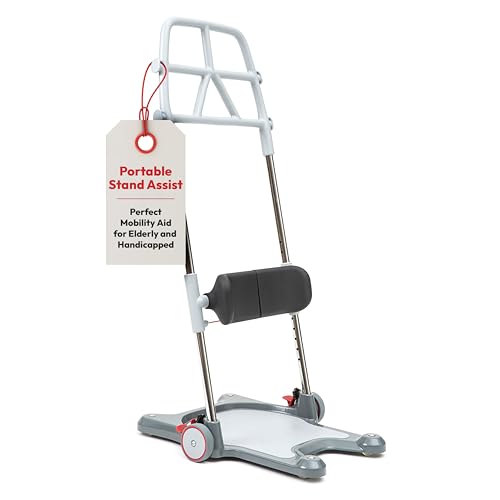
- Low-profile base is only 1.4 inches high
- Safe Working Load up to 375 lbs
- One-touch braking locks both wheels quickly
Best For: Short-distance transfers in tight spaces
Home Care Stand Assist
Sit to Stand Lift for Elderly, 400 lbs Capacity
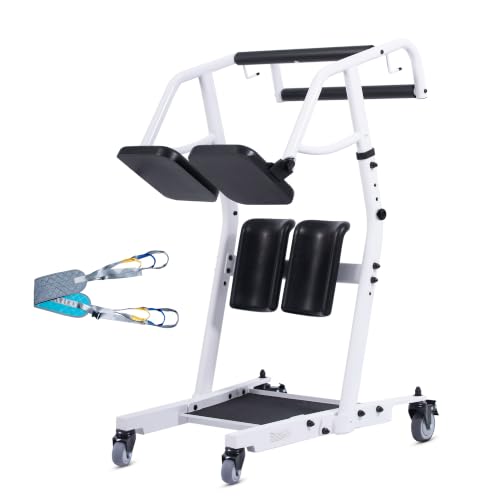
- Supports users who can bear 60-70% of their weight
- 400 lbs capacity with a low center of gravity
- Compact frame with locking rear casters
Best For: Home caregivers needing a sturdy, doorway-friendly transfer aid
Trusted Transfer Aid

- Supports users from 5'1" to 6'6" and up to 400 lbs
- Cushioned pads and ergonomic handbars
- Maneuverable through most doorways
Best For: Adults and seniors who need a proven, comfortable stand-assist aid
Compact Mobility Stand Assist

- Supports up to 420 lbs with a steel frame
- Silent 360-degree casters with brakes
- Adjustable knee pad and foam-padded contact points
Best For: Tight-space transfers that need higher capacity and quiet maneuverability
Home Care Transfer Aid – Vive Mobility Sit to Stand Lift
If you’re comparing portable sit to stand lift devices for home care, the Vive Mobility stand-assist is built for users who can bear 60% to 70% of their body weight and need extra help moving between common surfaces. It’s designed for transfers from a bed, wheelchair, toilet, or sofa, with a steel frame and swivel casters that help it move through most rooms.
Best For: Home caregivers and seniors who need a sturdy stand-assist for routine room-to-room transfers.
Pros:
- Supports up to 400 lbs with a strong steel frame.
- Cushioned handrails, shin rests, and split seat pads improve comfort.
- Dual locking brakes help keep the lift steady during transfers.
- Four swivel casters make it easier to glide across multiple flooring surfaces.
Cons:
- The 26-inch base may not fit narrow doorways.
- Only suited for people who can support most of their own body weight.
- Best use depends on measuring doorway clearance before purchase.
This is a practical option if you want a secure stand-assist for frequent daily transfers and have enough doorway space to accommodate the base.
Ultra-Compact Stand Aid – Joerns Hoyer UP Manual Lift
Among portable sit to stand lift devices, the Joerns Hoyer UP stands out for compact storage and travel-friendly use. It folds and packs easily, while still offering a 440 lb safe working load, making it a strong fit when you need a transfer aid that can handle daily use in tight spaces.
Best For: Caregivers and users who need a foldable stand-assist for home, travel, or compact storage.
Pros:
- Ultra-compact design folds for transport and storage.
- Supports up to 440 lbs.
- Adjustable base helps it fit around furniture and doorways.
- Sling-free sit-to-stand transfers can be more comfortable for toileting and mobility.
Cons:
- At 81 lbs, it is not the lightest option to move around.
- Requires the user to have weight-bearing ability and trunk strength.
- May be more than needed for very simple transfer needs.
If portability and storage matter as much as strength, this model offers a balanced mix of compact convenience and medical-grade support.
Open-Design Patient Transport – VOCIC Sit to Stand Lift
This VOCIC model is a practical pick if you’re shopping for portable sit to stand lift devices that prioritize active participation and straightforward transfers. Its open design is meant for users who can sit up and support their own core and upper body, and its low-profile base plus wheels help it move through indoor spaces.
Best For: Adults who can support their own upper body and want an open-design transfer aid for indoor use.
Pros:
- 400 lb capacity with reinforced steel construction.
- Foam-wrapped handgrips, shin pads, and split-seat cushions add comfort.
- Dual-lock braking system helps prevent unwanted movement.
- Low-profile base and adjustable knee pad support easier positioning.
Cons:
- Does not include or support a safety belt restraint.
- Not recommended for completely immobile or paralyzed patients.
- Intended for users with enough core and upper body control to participate.
For the right user, this is a simple and sturdy stand-assist option that emphasizes active transfer support and stable indoor handling.
Adjustable Safety Transfer Aid – PERLECARE Sit to Stand Lift
For buyers comparing portable sit to stand lift devices, the PERLECARE model focuses on fit, safety, and easy room-to-room movement. Adjustable seat and knee-pad heights help tailor positioning, while the 26.5-inch width is designed to fit most doorways for transfers between beds, toilets, wheelchairs, and sofas.
Best For: Caregivers and users who want an adjustable stand-assist with a safety strap and doorway-friendly width.
Pros:
- Adjustable seat and knee-pad heights help with user alignment.
- Additional safety strap adds support during the transfer process.
- 26.5-inch width is made to fit most doorways.
- Lockable casters improve stability during standing and sitting.
Cons:
- Still requires sufficient user strength for sit-to-stand transfers.
- Adjustability adds setup steps compared with simpler aids.
- Best suited to indoor transfer routes the user can navigate safely.
This is a well-rounded option if you want a stand-assist that emphasizes adjustability and added security without sacrificing mobility through the home.
Heavy-Duty Home Transfer Helper – ProHeal Stand Assist Lift
If you’re comparing portable sit to stand lift devices for safer everyday transfers, the ProHeal Stand Assist Lift is built for users who can support 60-70% of their body weight and need help moving between a bed, wheelchair, toilet, or seat. It emphasizes fall prevention, caregiver safety, and a more dignified transfer than a standard patient lift, without relying on slings for the core standing-assist setup.
Best For: Home users and facilities that need a sturdy stand-assist lift for partial-weight-bearing transfers.
Pros:
- Supports transfers between beds, wheelchairs, toilets, seats, and more
- Dual rear locking casters add stability during use
- Dual shin pads provide extra support and comfort
- 3-year warranty and modular design for easier replacement parts
Cons:
- Designed for users who can support 60-70% of their body weight
- At 75 pounds, it is not a lightweight lift
- Optional side and support straps are mentioned, but not included as standard
This is a practical pick if you want a straightforward stand-assist solution focused on safety, durability, and low-hassle transfers. The no-sling approach may appeal to caregivers who want a simpler workflow for routine moves.
Adaptive Transfer Lift – ELENKER Adjustable Sit-to-Stand Lift
Among portable sit to stand lift devices, the ELENKER Sit to Stand Patient Lift stands out for adjustable fit and everyday transfer support. It is aimed at users who need rehabilitation assistance or can bear partial weight, and it includes a transport sling plus features that make positioning and caregiver handling easier in homecare settings.
Best For: Caregivers and users who want an adjustable, sling-based sit-to-stand lift for routine transfers.
Pros:
- Adjustable base width, lift height, and leg support height for better fit
- Multi-hook attachment points and sling design help secure the transfer
- Foam armrests and a rotating pump handle improve caregiver comfort
- Low-friction casters and locking casters support smooth, controlled movement
Cons:
- Intended for partial-weight-bearing users, not full lifting
- At 100 pounds, it may be cumbersome to move or store
- Requires sling attachment during use
If you want flexibility in sizing and a more guided transfer setup, this ELENKER model is a strong practical choice. The combination of adjustability, locking casters, and sling security makes it well-suited to regular use across different homecare scenarios.
Compact Portable Stand Assist – Molift Raiser Pro
If you’re looking at portable sit to stand lift devices for short-distance standing transfers, the Molift Raiser Pro is designed as a compact transfer platform with a very low base height and easy-rolling wheels. It is aimed at elderly and handicapped users who need support moving between a bed, wheelchair, or shower chair, and it can be paired with an accessory strap for extra assistance.
Best For: Short-distance standing transfers in tight spaces where compact maneuverability is important.
Pros:
- Low-profile base measures only 1.4 inches high for easier positioning
- Safe Working Load up to 375 lbs offers strong capacity
- Padded, laterally stabilized leg supports add comfort and stability
- One-touch braking locks both wheels for quick stabilization
Cons:
- Built for standing transfers over short distances, not full patient lifting
- Accessory strap is sold separately if extra assistance is needed
- Less geared toward users who need a sling-based transfer system
This model makes sense if compact size and simple maneuvering matter more than a traditional sling lift. Its low base, braking system, and supportive contact points make it a practical option for controlled everyday transfers.
Home Care Stand Assist – Sit to Stand Lift for Elderly, 400 lbs Capacity
If you’re comparing portable sit to stand lift devices for home care, this model is built around straightforward assisted transfers for users who can support 60-70% of their weight. It’s designed to help move between a wheelchair, bed, sofa, or toilet, while keeping the frame compact enough to fit through most doorways.
Best For: Home caregivers and users who need a stable, compact transfer aid for supported standing.
Pros:
- Supports up to 400 lbs for a broad range of adult and senior users
- Height-adjustable knee pads, foldable seat cushions, and padded armrests improve comfort
- Rear casters include braking for secure positioning before transfers
- Compact enough for most doorways and smooth surfaces like tile or carpet
Cons:
- Requires the user to be able to stand and bear a significant portion of their weight
- Heavier at 73 lbs, so it is not the easiest option to lift or carry
This is a practical pick when safety, stability, and a higher weight rating matter more than ultra-light portability. The included transfer sling hooks and home-friendly footprint make it a solid everyday aid for assisted sit-to-stand movement.
Trusted Transfer Aid – Lumex LF1600 Stand Assist
For shoppers evaluating portable sit to stand lift devices, the Lumex LF1600 focuses on safe assisted standing with minimal help from the caregiver. It’s made for active user participation and has a maneuverable frame that can still pass through most doorways and around furniture.
Best For: Adults and seniors who need a stable stand-assist aid with a familiar, proven design.
Pros:
- Supports users from 5’1″ to 6’6″ and up to 400 lbs
- Cushioned knee pads, ergonomic handbars, and a padded seat add comfort
- Designed to reduce strain and injury for caregivers during transfers
- Maneuverable through most doorways and around furniture
Cons:
- Works best for users who can actively participate in standing and sitting
- At 61 lbs, it may still be cumbersome for some home users to reposition
The LF1600 is a sensible option if you want a well-established stand assist with a strong support range and comfort-focused contact points. Its balance of stability and maneuverability makes it suitable for routine chair transfers in home or care settings.
Compact Mobility Stand Assist – Sit to Stand Patient Lift
If you need portable sit to stand lift devices for tighter spaces, this model emphasizes compact movement, quiet operation, and secure braking. It’s designed to help transfer patients between a bed, wheelchair, toilet, or sofa while fitting through standard doorways and navigating around furniture.
Best For: Home or facility transfers where compact maneuverability and higher weight support are priorities.
Pros:
- Supports up to 420 lbs with a robust steel frame
- Four silent medical-grade casters offer 360-degree steering
- Brakes on the wheels help keep the unit stable when parked
- Foam handrails, cushioned shin rests, and split seat pads improve comfort
Cons:
- Still requires the user to be unable to walk but able to use a stand-assist transfer device
- Assembly is needed, even though the kit and instructions are included
This is a strong fit if you want higher capacity without giving up a compact profile. The adjustable knee pad and secure wheel-locking setup make it a practical choice for frequent transfers in apartments, homes, or nursing facilities.
How We Picked the Best Portable Sit to Stand Lift Devices
We looked for Portable Sit to Stand Lift Devices that balance stability, ease of use, maneuverability, and weight capacity. We also considered base adjustability, locking casters, compact storage, doorway clearance, and whether the design suits home care or light facility use.
Because these lifts are used for safety-critical transfers, we prioritized clear support features such as belts, knee support, secure standing assistance, and straightforward setup.
Quick Comparison
In this category, the main differences are portability versus lifting support. Some models are more compact and easier to move through tight spaces, while others emphasize higher load ratings, wider bases, or stronger transfer stability. The best choice depends on the user’s mobility level, caregiver strength, and the layout of the home.
Key Buying Factors for Portable Sit to Stand Lift Devices
Weight Capacity
Choose a lift rated comfortably above the user’s current weight, with room for equipment, clothing, and future needs. Never treat the maximum rating as a target.
Base Width and Doorway Clearance
If the lift must pass through standard doorways or narrow hallways, measure carefully. A narrower base can improve access, but the unit still needs enough stance for safe transfers.
Adjustability and Fit
Look for adjustable knee pads, seat support, and base settings so the device matches the user’s height and transfer position. A poor fit can make standing assistance unstable or uncomfortable.
Mobility and Braking
Lockable wheels, smooth casters, and a compact frame matter when moving between rooms. Good braking is essential whenever the lift is positioned for a transfer.
Ease of Use
For caregivers, simple operation matters just as much as strength. Manual designs can be a good fit when portability and low maintenance are priorities, while more supportive setups may help in more frequent-use environments.
Who Should Buy Which Portable Sit to Stand Lift Devices?
If you need a lighter, easier-to-store option for occasional home transfers, choose a compact model with simple setup and good maneuverability. If the user needs more support or the lift will be used often, prioritize higher capacity, stronger stabilization, and better adjustability.
For tight spaces, look closely at doorway width and base dimensions. For caregivers managing heavier transfers or multiple daily moves, a sturdier frame and secure standing support are worth the extra bulk. In short, the best Portable Sit to Stand Lift Devices are the ones that match both the person and the environment, not just the spec sheet.